Caregiver Daily Log Template: What to Include and How to Keep It Up
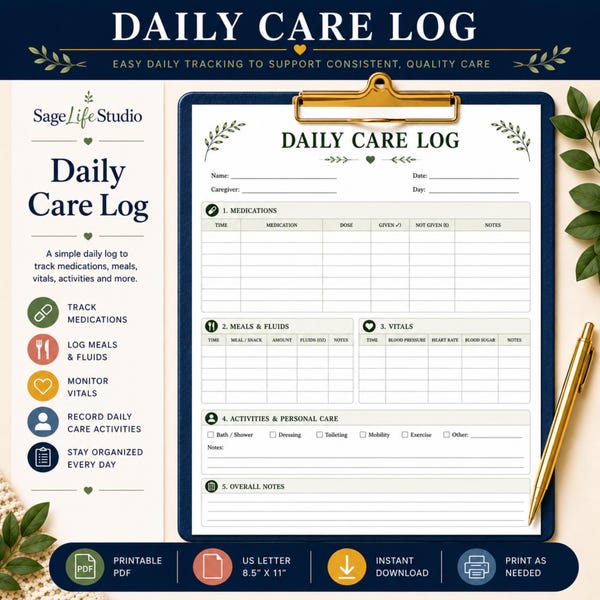
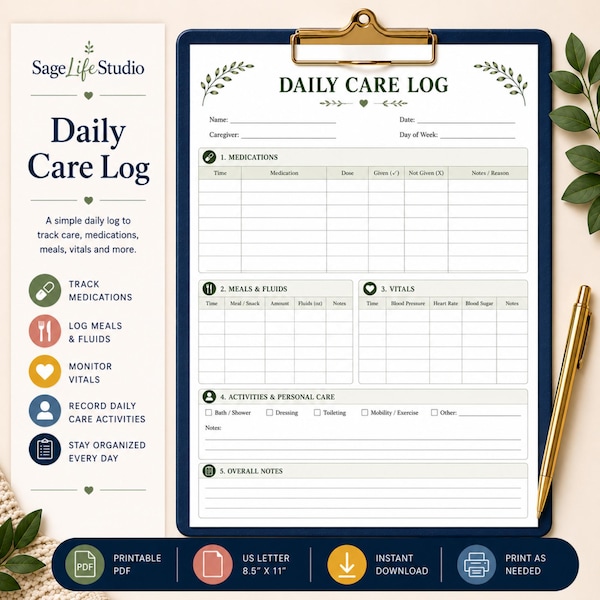
A good caregiver daily log has the date, who wrote it, a few short sections for the day’s routine, and a space for anything the next person needs to know. Aim for a page you can fill in within five minutes, because a log that is quick to complete is a log that actually gets used.
This post covers how to organize a daily log, not what care to give. Your care team decides that, so follow their instructions and treat the log only as a way to keep information in one place.
Why a daily log helps
When several people share caregiving, details get lost. One person remembers that lunch went fine, another has no idea. A daily log gives everyone the same record, makes handoffs smoother, and gives you something to look back at when you are asked “how has the week gone?”
It also helps you. Tired memory is unreliable, and a written note beats trying to recall what happened on Tuesday.
The basic template
Start with a header, then sections you can tick or fill in quickly. Here is a layout that works for most households:
- Date and day of the week
- Written by (name and time of entry)
- Mood and energy in a word or two, in your own words
- Meals and drinks (what was offered, what was eaten, any special instructions from the care team)
- Medications given or taken as listed on the care team’s plan (tick and time only)
- Activities and outings (walks, visitors, appointments, hobbies)
- Rest and sleep (nap times, bedtime, wake time)
- Personal care (bathing, dressing, help provided)
- Anything unusual to mention to the family or care team
- Notes for the next person
You do not need every section every day. Delete the ones that do not apply to your situation and add your own.
Keep it factual
Write what you saw and did, not what you think it means. “Ate half of lunch, said they were not hungry” is useful. “Seemed to be getting worse” is a guess that can worry people and may not be accurate.
If something worries you, note it plainly, include the time, and pass it to the care team. They are the right people to interpret it. Never use the log to decide on treatment.
Medications: record, do not decide
If the log includes medications, copy the schedule exactly as the care team or pharmacy gave it. Add a tick box and a time. Do not write dosing advice or change anything on your own. For a fuller system, see our post on a medication log for a family member, and keep the two together in the same binder.
Make it easy to keep going
Most logs fail because they are too long. These habits help:
- Keep the log and a pen in the same spot every day, such as the kitchen counter
- Fill it in at fixed times, for example after lunch and at bedtime
- Use ticks, short words and times instead of full sentences
- Keep one page per day so nothing is hidden
- Review the week on a set day and file the pages
If your log starts to feel like homework, cut a section. A shorter log you keep is better than a detailed one you abandon.
Daily log versus shift notes
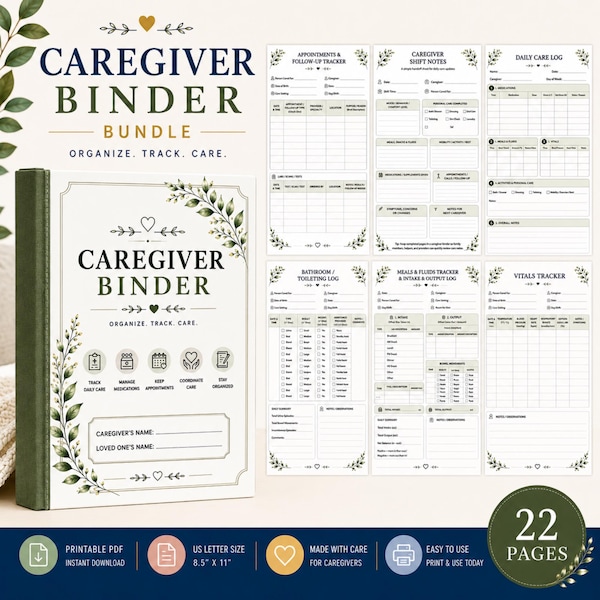
A daily log covers the whole day and is usually kept by one household. Shift notes are written by each person who works a shift and focus on what to tell whoever comes next. If you have paid or rotating helpers, use both: the daily log for the overall record, and shift notes for handoffs.
Where to keep it and who sees it
Choose one location and tell everyone involved. A binder near the front door or kitchen works well. Think about privacy too, since the log may hold personal details. Keep it out of sight of visitors, and ask the family how they would like past pages stored.
When it is time for an appointment, bring a few recent pages so you can share accurate details instead of relying on memory.
Quick checklist
- Add date, your name and the time to every entry
- Use short, factual notes and ticks
- Copy medication schedules exactly from the care team’s plan
- Write a line for the next person each day
- Keep the log and pen in the same place
- File pages weekly in a binder
Frequently asked questions
Ready-made printables to get you started
If you would rather begin with finished pages than a blank sheet, you can browse printable logs and binders on Etsy.
Frequently asked questions
How long should a caregiver daily log be?
One page per day is plenty. If it takes more than about five minutes to complete, remove sections you do not use so it stays easy to keep up.
Should I record medications in the daily log?
You can tick when medications were given according to the care team's plan, but do not add your own dosing instructions. Follow the care team's directions and keep a separate medication list.
Is a daily log the same as medical advice?
No. A log only helps you keep information organized. Questions about health or care should go to the care team, who will tell you what to do.