Emergency Evacuation Plan Sheet for Families With Pets and Dependents
An evacuation plan sheet is a single printed page that records where your household would go, who to call, who is responsible for whom and what to bring if you had to leave quickly. Fill it in once when things are calm, keep copies where everyone can find them, and review it a couple of times a year.
This post is about organizing information, not about emergency procedures. Follow the guidance of your local emergency management office and official alerts for what to do in a real emergency. The sheet only keeps your own household details in one place. Nothing here is medical or legal advice, and health-related details should always come from your care team’s instructions.
Why a written sheet helps
In a stressful moment, small details slip away: a phone number you only ever tap, the name of your dog’s vet, which neighbour has a spare key. A written page means the information does not depend on one person’s memory or on a phone that might be out of battery. It also lets a babysitter, relative or house sitter act on your plan even if you cannot be reached first.
What to put on the sheet
Keep it to one page, in large, readable print. Cover these areas:
- Household members: full names, dates of birth and a phone number for each adult
- Meeting places: one spot just outside the home and one farther away, such as a friend’s house
- Out-of-area contact: a person everyone can call or message to check in
- Who is responsible for whom: for example, “Sam takes the baby, Dana takes the dog”
- Key addresses: school, workplace, relatives and the route you would take
- Where the go-bag and papers are kept
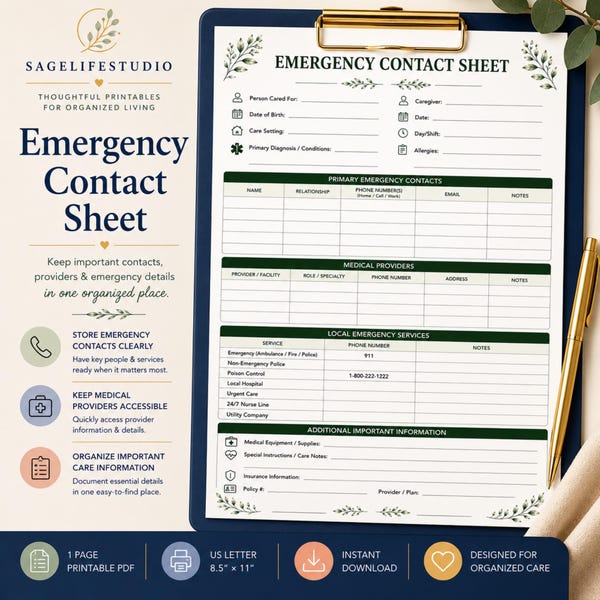
Add a short line for anyone who needs extra help, such as a dependent adult or a child with specific routines. Write down the support details exactly as the care team or school has given them to you, and note where the full information sheet is kept. A family emergency binder is a good home for the longer documents this page points to.
Pets belong on the plan too
Animals are easy to forget when everything else feels urgent, so give them their own section:
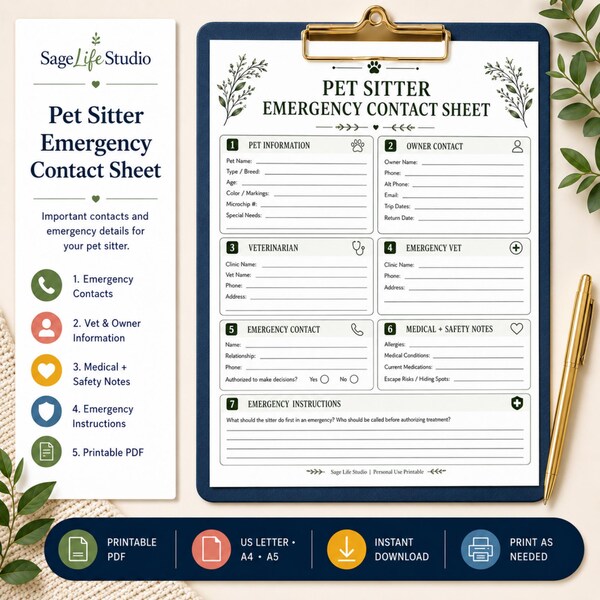
- Each pet’s name, species and a short description
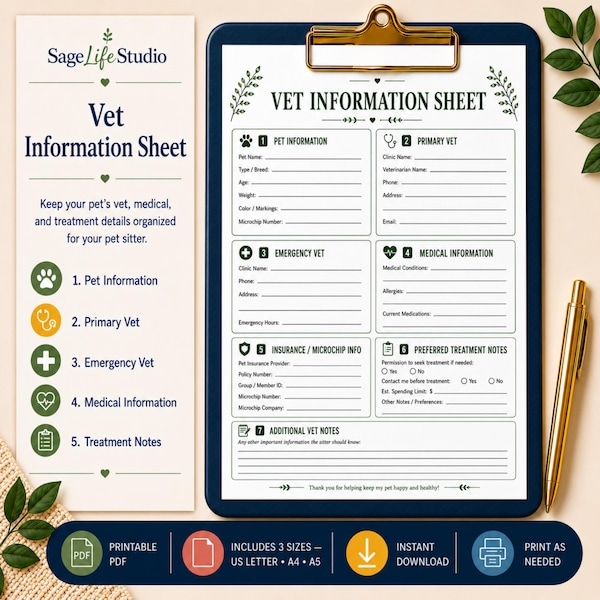
- Your vet’s name and phone number
- Where carriers, leashes and spare bowls are stored
- Where food and any labelled medication are kept, copied from your vet’s or the label’s instructions
- A list of pet-friendly places you might stay, to look up ahead of time
Do not guess about animal care. If you have a question about food, medication or health, ask your vet. Our pet sitter information sheet covers many of the same details if you want a fuller version to hand to a sitter.
The go-bag and document list
Rather than trying to remember what to grab, list it. A simple checklist might include:
- Copies of ID and insurance cards, in a waterproof folder
- Contact sheet with every phone number written out
- Medication lists and care-team instructions, kept as printed copies
- Chargers, a spare phone battery and a little cash
- Pet supplies and records
- Comfort items for children
Medications themselves should be handled according to your pharmacist’s and doctor’s directions. The sheet simply reminds you to bring what your household’s care team has told you to bring.
Where to keep it and who gets a copy
A plan nobody can find is not much use. Try this:
- One copy on the fridge or inside a kitchen cupboard
- One in the go-bag
- One with a trusted neighbour or relative
- A photo on each adult’s phone, plus a copy with any regular sitter or caregiver
Pair it with an emergency contact sheet so the numbers are up to date and easy to hand over.
Keep it current
Put a reminder in your calendar twice a year, perhaps when the clocks change, to check phone numbers, addresses, the vet’s details and the go-bag contents. Update the date at the top and throw away the old copies so there is only one version in circulation. Walk through the plan with the whole household, including older children, so everyone knows where the paper lives.
Quick checklist
- One page, large print, dated
- Household members and phone numbers
- Two meeting places and an out-of-area contact
- Who is responsible for each person and pet
- Vet details and pet supply locations
- Go-bag and document list
- Copies in several places, reviewed twice a year
Frequently asked questions
Ready-made printables to get you started
If you would rather start with finished pages than a blank sheet, you can browse printable logs, planners and binders on Etsy.
Frequently asked questions
What should an emergency evacuation plan sheet include?
Household members and phone numbers, meeting places, an out-of-area contact, who is responsible for whom, pet details, a go-bag list and where documents are kept. Follow local officials' guidance for real emergencies.
How do I include pets and dependents in a family emergency plan?
Give each pet and each dependent a short section with names, contacts, supply locations and the care team's or vet's written instructions, copied exactly rather than from memory.
How often should I update the plan?
Review it at least twice a year and whenever phone numbers, addresses, schools, vets or household members change, and replace all old copies.