Caregiver Expense Tracker: How to Keep Receipts and Mileage Organized
A caregiver expense tracker is one running page (or a small folder) where you record every caregiving cost as it happens: the date, what it was for, the amount and where the receipt lives. Add a separate mileage log for trips, and keep both in the same place so nothing depends on memory at the end of the month.
This post is about organizing records, not about money or tax rules. Ask a qualified tax professional, accountant or your insurer what counts toward anything official, and follow the care team’s instructions on anything health-related. A tracker only keeps your own information in order.
Why bother tracking small costs
Caregiving expenses rarely arrive in one big bill. They show up as pharmacy runs, parking, groceries, supplies, co-pays and gas. Individually they seem minor, but together they add up, and they get lost quickly. A written record helps you see the real total, lets family members who share costs split them fairly, and gives you something to hand over if someone else asks you to document spending.
What to record for every expense
Keep each entry short and consistent. A good row on your tracker includes:
- Date of the purchase
- Who or what it was for (for example, Mum, or household supplies)
- Category, such as supplies, transport, food, appointments or paid help
- Amount and how you paid
- Receipt location: a folder number, an envelope or a photo file name
- Paid by: you, a shared account, or another family member
If someone has agreed to reimburse you, add a column for “repaid” and tick it when the money comes back. That one column prevents a lot of awkward conversations.
A simple mileage log
Driving is the cost people forget most. Keep a small notebook or printed page in the car and note, at the time:
- Date
- Starting point and destination
- Purpose of the trip, such as a pharmacy pickup or a visit
- Odometer start and end, or total miles
Writing it down on the spot takes ten seconds. Reconstructing a month of trips from your calendar later takes an evening.
Sorting and storing receipts
Receipts are small, faded and easy to lose, so give them a fixed home:
- Keep a “to enter” envelope in your bag or car and empty it once a week
- Take a quick phone photo of each receipt as a backup
- File paper copies in a folder by month, or by category if you prefer
- Write the tracker row number or date on the receipt itself
If you already keep an insurance and billing paperwork system, store receipts in the same drawer or binder so related papers sit together.
Sharing costs with family
When siblings or relatives share caregiving costs, a written tracker keeps things fair and calm. Pick one day each month to review it together, either at the table or by sending a photo of the page. Agree ahead of time what counts as a shared cost and what each person covers on their own. Our guide to splitting caregiving tasks between family members has a similar approach for dividing the work itself, and the same habits apply to money: write it down, review it regularly and keep it visible.
A weekly five-minute routine
Tools only help if you actually use them. Try this rhythm:
- Empty the receipt envelope.
- Enter each receipt on the tracker.
- Add any mileage from the car notebook.
- File the receipts and snap a photo of anything faded.
- Note anything that someone owes you.
Pick the same day each week, such as Sunday evening, and tie it to something you already do. Once it is a habit, month-end totals take minutes.
Quick checklist
- One expense tracker with date, purpose, category, amount and receipt location
- A mileage log kept in the car
- A weekly “to enter” envelope
- Receipts filed by month, with photo backups
- A “repaid” column for shared costs
- A monthly review with family members who share costs
- Questions about taxes or reimbursements go to a qualified professional
Frequently asked questions
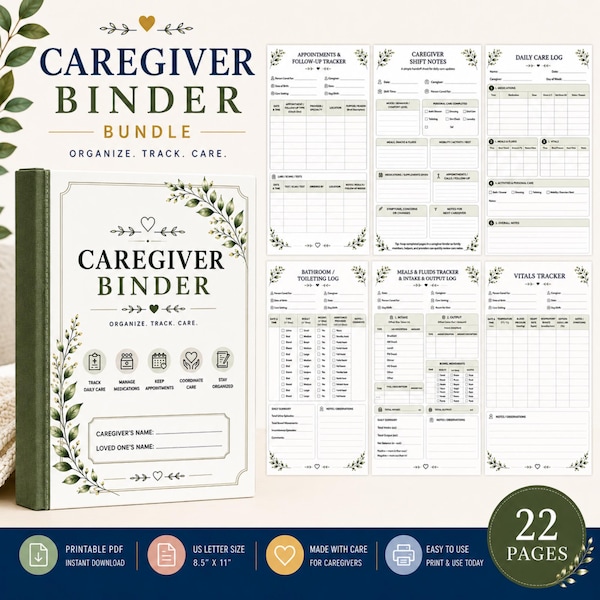
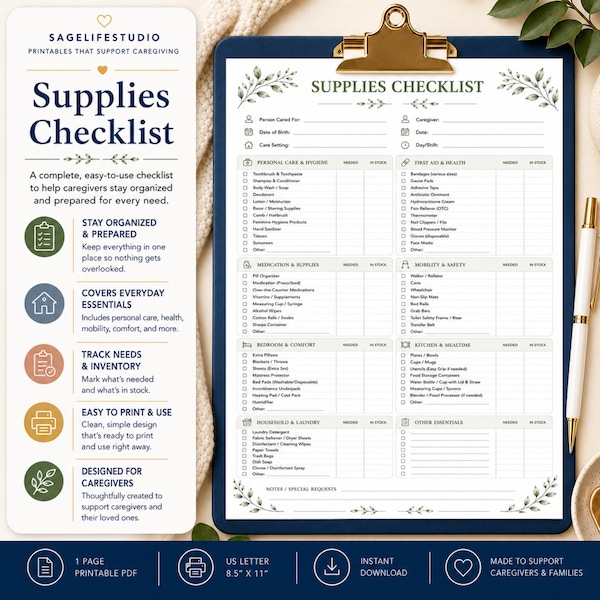
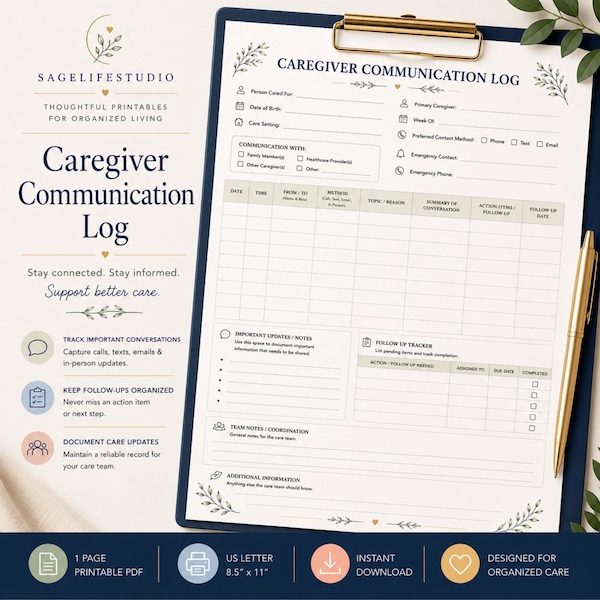
Ready-made printables to get you started
If you would rather start with finished pages than a blank sheet, you can browse printable logs, planners and binders on Etsy.
Frequently asked questions
What should a caregiver expense tracker include?
The date, who or what the expense was for, a category, the amount, how it was paid, where the receipt is stored and whether it has been repaid. Add a separate mileage log for trips.
How long should I keep caregiving receipts?
That depends on your situation, so ask a tax professional, accountant or the organization requesting the records how long to keep them. A tracker simply makes them easy to find.
How do I split caregiving costs fairly with siblings?
Agree in advance which costs are shared, record each one on a common tracker, and review it together once a month so everyone sees the same numbers.