Pet Medication and Feeding Schedule for Multiple Pets: One Page the Whole Household Can Follow
The simplest way to manage feeding and medication for several pets is one schedule page per animal, kept side by side, plus a single “who gets what, when” overview for the household. Each pet gets its own name, its own food details and its own tick boxes, so nobody has to remember which dog gets the afternoon dose or which cat eats the special food.
This post is about keeping information organized. It does not tell you what, when or how much to feed or give any animal. Copy those details exactly from your veterinarian’s instructions or the product label, and ask your vet or pharmacist about any medication question.
Why multiple pets need a system
With one pet, routines live in your head. With three, they blur. Two similar-looking bowls, two bottles in the same cupboard, and a busy morning is all it takes for a mix-up or a doubled-up dose. Writing the schedule down once means the plan does not depend on who happens to be home, and anyone covering for you can see at a glance what is normal.
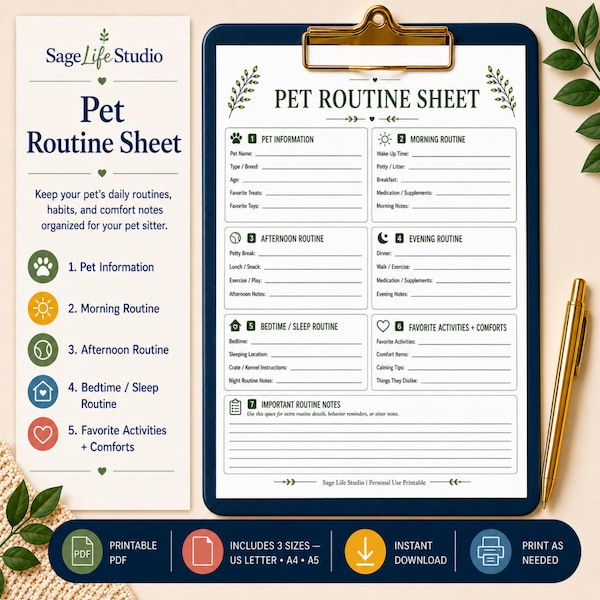
Start with a household overview
Make one page that lists every pet in the home. Include:
- Name, species and a short description (for example, “Biscuit, brown dog, wears the blue collar”)
- Where each pet eats, especially if animals are kept apart at mealtimes
- Anything one pet must not have, written as your vet advised
- Your vet’s name and phone number and the emergency clinic you would use
A short description matters more than you would think when a sitter meets your animals for the first time. A pet care binder is a good home for this page.
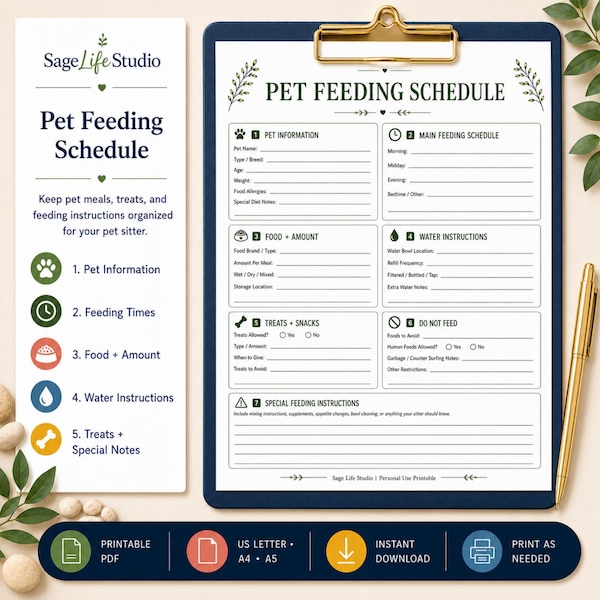
One feeding schedule per pet
Give every pet a separate sheet, even if their meals look similar. For each one, record:
- Food brand or type, copied from the packaging or your vet’s instructions
- Amount and measuring tool, such as “the green scoop”, exactly as your vet advised
- Mealtimes, with a tick box and initials for each feeding
- Treat rules and who may give them
- Water and bowl notes, for example “stainless bowl only”
A tick box matters because it answers the question “did you already feed her?” without a phone call. If your household has several adults and children, agree that whoever feeds ticks the box straight away.
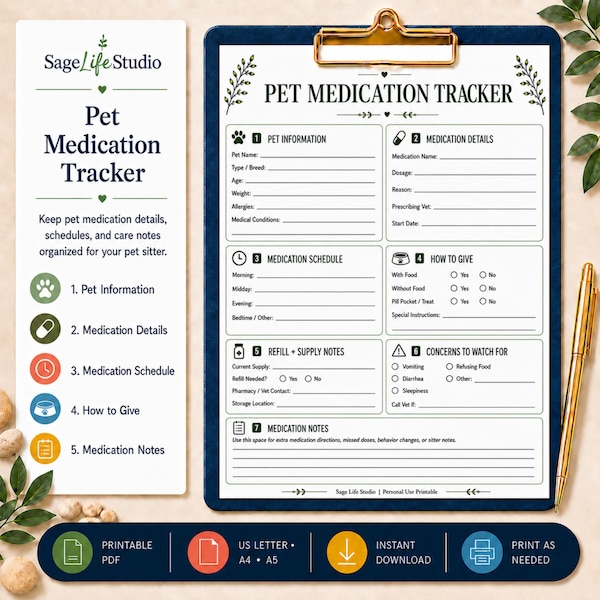
One medication tracker per pet
Keep medication pages apart from the feeding pages so they are easy to find and easy to hand over. Each tracker should contain:
- The medication name exactly as it appears on the label
- The amount and timing as written by your vet or on the pharmacy label
- Start date and, if given, the end date or date to check back
- A tick box and initials for every dose
- A notes column for anything to mention to your vet, such as a missed dose
Never adjust a dose to make the schedule tidier. If instructions change, update the page, write the date at the top and throw away the old copy so two versions are never in circulation. Our guide to the vet visit log and pet medication tracker goes into more detail on this part.
Make mix-ups harder
A few organizing habits help in multi-pet homes:
- Use a different colour of paper or a coloured tab for each pet, and use the same colour on their bowl or medication box
- Store each pet’s medication in its own labelled container
- Keep the schedule where the task happens, such as a clipboard near the food storage
- Put the time of day in the same order on every sheet so pages are easy to compare
A simple combined layout
A weekly overview table gives everyone the big picture:
| Time | Pet | Task (as instructed) | Done by |
|---|---|---|---|
| Morning | Biscuit | Breakfast | Initials |
| Morning | Pepper | Breakfast and medication per label | Initials |
| Evening | Biscuit | Dinner | Initials |
Print a fresh sheet each week or month and file the old ones, which also gives you a handy record to show your vet.
Sharing it with sitters
When someone else is caring for your animals, hand over the overview plus each pet’s sheets, with the medication in its labelled container. Add a pet sitter information sheet with your contact details and the vet’s number, and ask the sitter to tick every task. Tell them to call your vet or emergency contact if they have any concern about an animal’s health.
Quick checklist
- One overview page listing every pet
- One feeding sheet per pet with tick boxes
- One medication tracker per pet, copied exactly from vet or label instructions
- Colour coding or tabs to tell pets apart
- Vet and emergency clinic details on the overview
- Old versions removed when instructions change
Frequently asked questions
Ready-made printables to get you started
If you would rather start with finished pages than a blank sheet, you can browse printable logs, planners and binders on Etsy.
Frequently asked questions
How do I organize feeding and medication for more than one pet?
Use one overview page for the household and a separate feeding sheet and medication tracker for each pet, with tick boxes and initials so everyone can see what has been done.
How do I stop mixing up my pets' medication?
Store each pet's medication in its own labelled container, use colour coding, and keep each tracker copied exactly from the vet's or label's instructions. Ask your vet or pharmacist about any medication question.
Can a schedule tell me what or how much to feed my pet?
No. A schedule only keeps information organized. Food amounts, medication and health questions should always go to your veterinarian.