Caregiver Handoff Notes: What to Tell the Next Person on Shift
Good caregiver handoff notes tell the next person four things: what happened during your shift, what is still open, what is coming up next, and who to call with questions. Write them in plain, factual sentences, keep them to one page, and hand them over in person or leave them in the same spot every time.
This guide is about organizing information only. It is not medical advice, and it does not tell anyone how to provide care. Always follow the care team’s instructions, and use handoff notes simply to keep what you observed and did written down in one place.
Why handoff notes matter
Handoffs are where small details slip away. The person finishing a shift knows what the day felt like, and the person arriving does not. A written note closes that gap so nobody has to guess, and so family members, paid helpers and relatives who rotate in all work from the same page.
Notes also protect you. If a question comes up later, a dated page shows what was done and what was observed. Pair handoff notes with a caregiver daily log for the full record, and keep the handoff itself short enough to read in two minutes.
What to include in a handoff note
Stick to facts you saw or did. Skip guesses about causes or what something “probably” means; if you have a concern, write it as a question for the care team.
- Date, shift times and your name so the page can be found later
- Meals and drinks: what was offered and what was finished
- Items given as directed: which ones were checked off on the schedule, and the time, copied from your chart rather than from memory
- Activities and outings: appointments, visitors, walks, rest periods
- Mood and energy in plain words: “quiet after lunch,” “wanted to listen to music”
- Anything unusual you noticed: describe what you saw, without labeling it
- Supplies running low: gloves, pads, batteries, anything on the shopping list
- Open items: calls to return, forms to sign, questions for the next appointment
- What is next: the next scheduled event and who is expected to arrive
A simple script for the verbal handoff
When you can speak to the next person, a repeatable order keeps the conversation short. Try this:
- Quick summary: one or two sentences on how the shift went.
- Done: the main things completed, pointing to the checked-off chart.
- Not done or changed: anything skipped, delayed or different from the plan, and why.
- Heads-up: anything you want the next person to watch for or ask the care team about.
- Coming up: the next appointment, visitor or scheduled task.
- Questions: pause and let them ask.
Then hand over the written note so the details do not depend on anyone’s memory.
Where to keep the notes
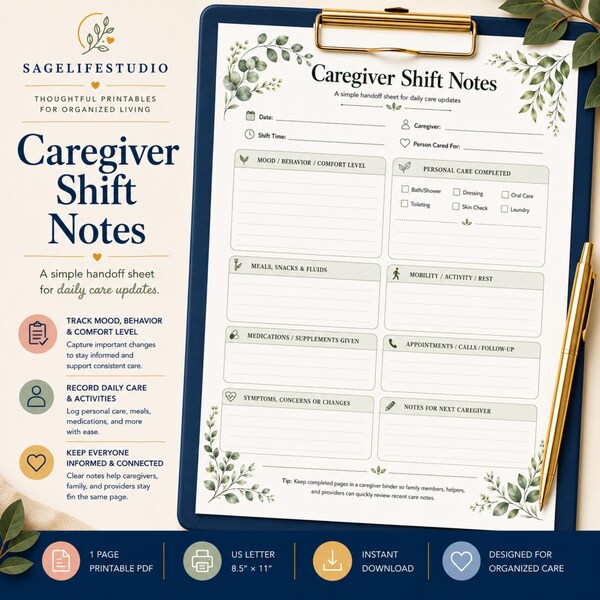
Pick one place and use it every time: a clipboard by the door, the front pocket of a binder, or a shared folder. Consistency matters more than the format. A pocket in your medical binder works well because the notes sit next to the contact list and medication chart. For a fuller walkthrough of the page itself, see our guide on caregiver shift notes.
Keep the notes useful
- Use the same layout each time so readers know where to look.
- Write times, not “earlier” or “a while ago.”
- Be specific: “ate half of the sandwich” is clearer than “ate okay.”
- Separate facts from questions. Put questions in a labeled box for the next appointment.
- Date every page and file completed ones in order.
- Respect privacy: keep the notes where only the people who help can see them.
When the care team needs to be told
If something concerns you, do not wait for the next handoff to raise it. Contact the care team or follow the emergency plan you were given, and record in your note that you did and what they told you. Your notes support those conversations; they never replace them.
Quick checklist
- Date, shift times and your name at the top
- Meals, activities and checked-off chart items
- Anything unusual, described plainly
- Supplies low and open to-dos
- What is coming next and who to call
- Verbal handoff in a set order, written note left in a set place
Frequently asked questions
Ready-made printables to get you started
If you would rather start with finished pages than a blank sheet, you can browse printable caregiver binders, logs and trackers on Etsy.
Frequently asked questions
What should caregiver handoff notes include?
Include the date, shift times, meals, activities, chart items you checked off, anything unusual described in plain words, supplies running low, open tasks and what is coming next. Keep it factual and follow the care team's instructions on health matters.
How long should a handoff note be?
One page is plenty. If the next person can read it in about two minutes and know what to expect, it is the right length.
Should handoff notes be on paper or digital?
Either works as long as everyone uses the same one in the same place. Paper by the door suits households with rotating helpers, while a shared folder suits family members who live apart.