Emergency Contact Sheet: Who to List and Where to Keep It
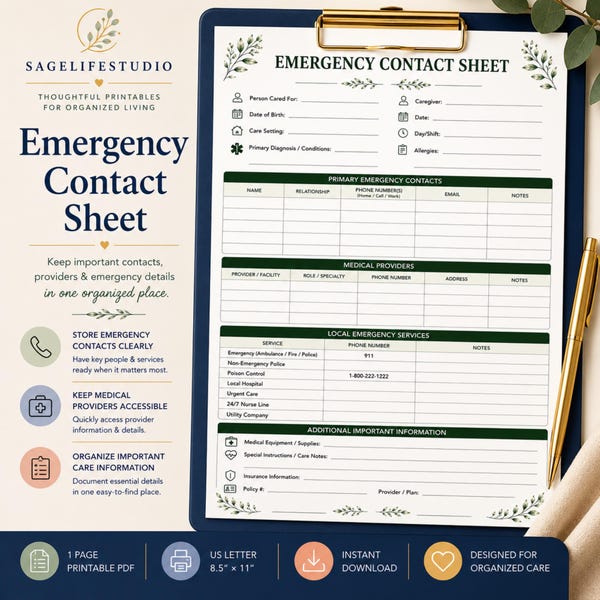
An emergency contact sheet is a single page listing the people and numbers someone would need in a hurry: family, neighbors, doctors, pharmacy, and the practical details a helper might not know. List people in the order they should be called, keep the page where everyone can find it, and check it a couple of times a year so the numbers are still right.
This post is about organizing information, not about what to do in a health situation. In an emergency, follow your local emergency services and your care team’s instructions. The sheet simply makes sure the right details are at hand.
Who needs one
Almost any household benefits from a sheet, but it is especially useful when someone else is helping. Babysitters, pet sitters, house sitters, relatives stepping in as caregivers, and substitute caregivers all work better with a clear page than with a phone number scribbled on a scrap of paper.
If you care for a family member, a sheet also helps if you are unreachable for a few hours. Anyone covering for you can see exactly who to contact next.
What to include
Keep it to one page so it stays readable. A good layout has these sections:
- Household details: full names, home address with a nearby cross street, and the main phone number
- Primary contacts: parents, partner, or main caregiver, with mobile numbers and a note on the best way to reach each
- Backup contacts: a relative, friend, or neighbor who can be reached if the primary contacts cannot, with their relationship to you
- Nearby helper: someone who lives close and has agreed to be listed
- Care team: doctor or clinic, specialist offices, and the pharmacy, with phone numbers
- Insurance: the plan name and where the cards are kept (write the location, not the card numbers)
- Pets: your vet, an emergency animal hospital, and who looks after the pets if you are away
- Other notes: building access codes, where spare keys are, or a line such as “dog is friendly but may bark”
Choosing and ordering contacts
Number the contacts in the order they should be called. A helper under pressure should not have to decide who is first.
Before you list anyone, ask them. People are generally glad to be named, but they should know they are on the sheet and agree to pick up the phone. Pick at least one contact who lives in a different area, since a local person may be affected by the same event as you.
For each person, write the name, relationship, phone number and a time note if it helps, for example “works nights, may be asleep until 3 pm.”
Health information: keep it factual and shared with care
Some households add a short section for health details a helper needs to know, such as allergies the care team has identified or the name of the person who manages medications. Copy only what the care team or the person’s own records say, and do not add guesses. The sheet organizes information; it does not replace guidance from the care team.
Think about privacy too. The more personal detail a sheet holds, the more careful you should be about who sees it. A babysitter may need a short list; a family caregiver may need the full set. Use a shorter version for casual helpers and keep the detailed one with your records. For a fuller system, see our post on what to put in a medical binder.
Where to keep it
A sheet is only useful if it can be found. Try:
- One copy on the fridge or inside a kitchen cabinet door
- One copy in your main binder or folder
- One copy by the front door for sitters and visitors
- A photo on your phone and shared with trusted family
- A copy in the car or a bag you take on outings, if it suits your household
Tell everyone involved where the copies live. If you are leaving someone in charge, point to the sheet when you walk them through the house. It pairs well with a babysitter information sheet or a pet sitter information sheet.
Keep it up to date
Numbers change, and an old sheet can be worse than none. Set a reminder to review it every six months, and update it right away after a move, a new phone number, or a change of doctor. When you update it, collect the old copies and replace them so two versions never circulate.
A simple trick: write “Updated:” with a date at the top of the page. Anyone can see at a glance how fresh it is.
Quick checklist
- Number contacts in the order to call
- Ask each person before listing them
- Include at least one backup who lives elsewhere
- Add care team, pharmacy and vet details
- Write where insurance cards are kept, not the numbers
- Print several copies and place them where helpers will look
- Add an updated date and review twice a year
Frequently asked questions
Ready-made printables to get you started
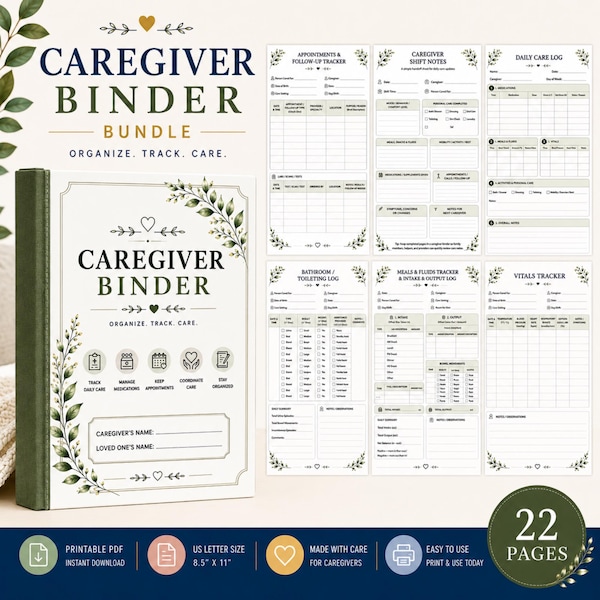
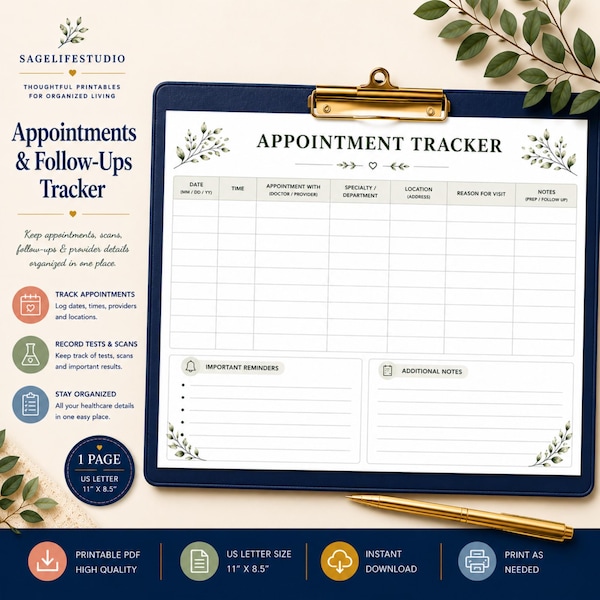
If you prefer a finished layout over a blank page, you can browse printable contact sheets, logs and binders on Etsy.
Frequently asked questions
How many emergency contacts should I list?
Three to five is usually enough: two primary contacts, a nearby helper and a backup who lives in another area. Number them in the order they should be called.
Should I put medical information on an emergency contact sheet?
Only include what the care team or the person's own records state, and keep it short. Follow the care team's instructions for anything health related. The sheet only keeps details organized.
How often should I update my emergency contact sheet?
Review it about every six months and any time a number, address or doctor changes. Add an updated date at the top so helpers know it is current.