Family Emergency Binder: Documents and Contacts to Keep Together
A family emergency binder is one organized folder that holds the contacts, document locations and household details someone would need if you were unreachable, away or dealing with a crisis. Start with a contact page, a list of where important papers are kept, and a household information page. Everything else is a bonus.
This is an organizing guide, not legal, financial or medical advice. Follow the instructions of your care team, and ask a qualified professional about wills, powers of attorney and similar documents. The binder only helps you keep information in one place.
Why keep it all together
In a stressful moment, nobody wants to search through drawers, phone notes and old email. A binder gives a spouse, grandparent, neighbor or babysitter a single place to look. It also works when the power is out or a phone battery is dead.
If you already keep a separate binder for health information, this one sits beside it rather than replacing it. Our guide to what to put in a medical binder covers that side in detail.
Page 1: contacts
Write contacts by hand or print them, and include full names, phone numbers and the person’s relationship to your family.
- Two or three emergency contacts, ideally in different locations
- Neighbors who could reach your home quickly
- Doctors, dentist, pharmacy and veterinarian
- School, daycare or workplace numbers
- Insurance companies and member service numbers
- Utility companies and a trusted repair contact
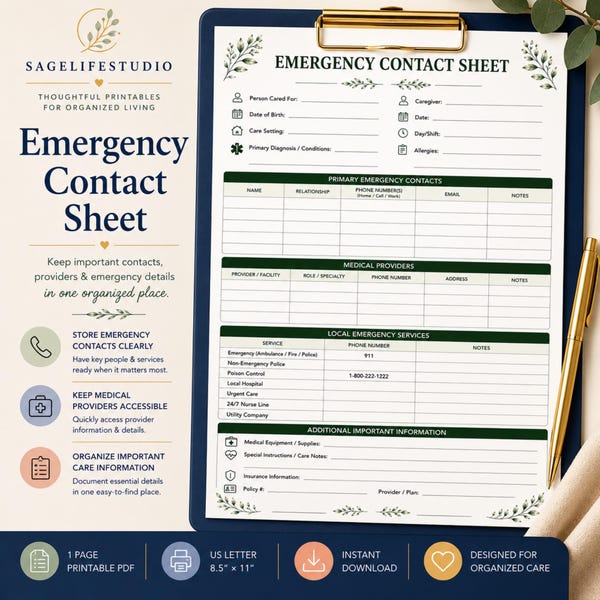
Our emergency contact sheet guide shows who to list and how to lay the page out.
Page 2: household information
This page helps a temporary helper run the house without guessing.
- Home address and nearest cross streets
- Where the water shutoff, breaker panel and gas shutoff are
- Wi-Fi name and where the password is kept
- Alarm instructions, or who to call about it
- Pet feeding notes and vet contact
- Who is allowed to pick up the children
For anything involving medications or health conditions, copy details exactly as the prescriber or care team gave them, and write the date. Do not add your own interpretation.
Page 3: a map of your documents
You usually do not need originals in the binder. You do need to know where they are. Make a simple list with the item, the location and the date you last checked.
- Birth certificates and passports
- Insurance policies: home, auto, health, life
- Wills and power of attorney documents, if you have them
- Bank accounts, loans and credit card contact numbers
- Vehicle titles, deed or lease
- Tax returns and where records are stored
Never write full account numbers, passwords or Social Security numbers in the binder. Write where the information is kept instead, such as “safe in the hall closet” or “password manager, ask Sam.”
Page 4: copies worth carrying
Keep photocopies or printed copies of insurance cards, photo IDs and immunization records in clear sheet protectors. If your family has a child with school plans or extra needs, our special needs parent binder guide explains how to organize those pages.
Page 5: a simple family plan
Write down the plans you have already agreed on.
- Where the family meets if you cannot get home
- Who picks up the children if you are delayed
- An out-of-area contact everyone calls to check in
- A short list of go-bag items, such as chargers, spare glasses and copies of key papers
Check with local emergency management or your school for official guidance for your area. The binder records your family’s decisions; it does not replace official instructions.
How to set it up in an afternoon
- Buy a 1 to 1.5 inch binder, five tabbed dividers and clear sheet protectors.
- Label tabs: Contacts, Household, Documents, Copies, Plan.
- Fill in the contacts page first, since it matters most.
- Walk through the house and write down shutoff locations.
- Choose a storage spot and tell the people who might need it.
Review it twice a year, such as when the clocks change. Date every update and cross out old pages instead of throwing them away.
Quick checklist
- Contacts for family, neighbors, doctors and school
- Household information and shutoff locations
- Document map with storage locations
- Copies of insurance cards and IDs
- Family meeting and pickup plan
- Review date written inside the cover
Frequently asked questions
Ready-made printables to get you started
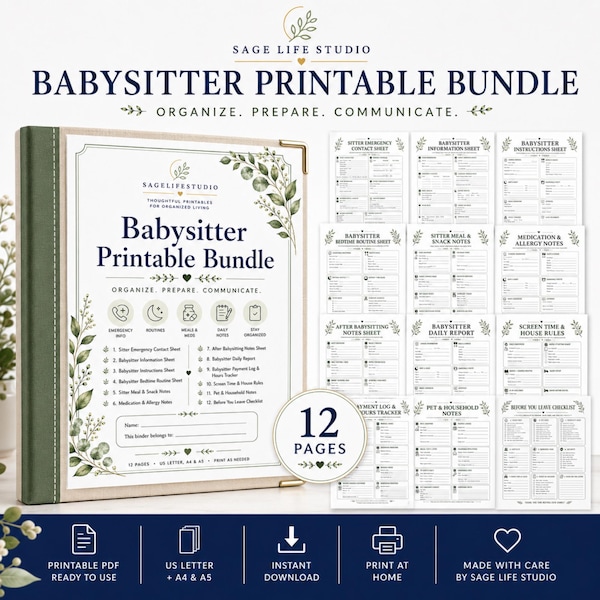
If you would rather start with finished pages than blank paper, you can browse family binders, emergency contact sheets and caregiver printables on Etsy.
Frequently asked questions
What should go in a family emergency binder?
Include a contact page, household information, a list of where key documents are stored, copies of insurance cards and IDs, and your family's written plan for pickups and meeting places.
Where should I keep a family emergency binder?
Keep it somewhere easy to find, such as a kitchen shelf or a closet near the door, and tell the people who may need it where it is. Consider a second copy of the contact page with a trusted relative.
Should I put passwords and account numbers in the binder?
It is safer to write where that information is kept rather than the details themselves. Ask a financial or legal professional if you are unsure how to store sensitive information.