IEP and School Paperwork Binder: How to Organize It
An IEP and school paperwork binder is one organized folder that holds your child’s school plan, reports, meeting notes and correspondence, sorted so you can find any page in under a minute. If you are walking into a school meeting, answering an email from a teacher or handing information to a new staff member, the binder means you are working from your own records instead of memory.
This is an organizing guide only. It is not legal or educational advice. For questions about your child’s rights, services or school decisions, talk with your child’s school team or a qualified professional, and keep the binder as a tidy record of what you are given and told.
Why a dedicated school binder helps
School paperwork arrives in waves: a draft plan before a meeting, a progress report mid-year, a stack of forms in August. Without a system, important pages end up in backpacks, email threads and kitchen drawers. A binder gives every document one home and shows the order things happened in.
It also makes meetings calmer. When you can flip to last year’s plan next to this year’s draft, or find the date of an email in seconds, you can spend your energy on the conversation. If your child also has a health binder, the school binder pairs well with a special needs parent binder so each topic has a clear place.
What to include, tab by tab
Use a 1.5 to 2 inch binder with tabbed dividers, a three-hole-punch pouch for loose items and clear sleeves for pages you do not want to punch.
1. Snapshot page
Put a one-page summary at the front: your child’s name, grade, school, teacher names, school office phone, and the names and emails of the people on the school team. Add a recent photo if you like. This is the page you hand to a substitute or a new staff member.
2. Current plan
Keep the most recent plan or school-issued document here, exactly as you received it. Do not write on the original. Use a sticky note or a separate notes page for your own comments and questions.
3. Past plans and reports
File older plans, progress reports and report cards in date order, newest on top. Having the earlier versions on hand lets you see what changed from year to year.
4. Evaluations and assessments
Keep any evaluation reports the school or outside professionals give you. Note the date, who completed it and where the original is stored. Your child’s care or education team can explain what the results mean.
5. Meeting notes
Make a simple page for each meeting with these lines:
- Date, time and who attended
- Topics discussed
- What was decided or promised, and by whom
- Any follow-up date
- Questions you still have
Write down the school’s own words where you can, and keep your interpretation separate.
6. Communication log
List each important email, call or note home: date, person, topic and a short summary. Print or save key emails and place them behind this tab. A written trail makes it easy to answer “when did we first talk about this?”
7. Work samples and progress
Add a few representative samples, a photo of a project or a note about a milestone. You do not need everything, just enough to show a picture over time.
8. Forms, health and emergency information
Hold permission slips, medication or health forms the school asked for, emergency contacts and pickup authorizations. Medication and health instructions should always come from your child’s doctor and be shared with the school as the care team and school require. If you need a layout, our emergency contact sheet guide works well here.
Setting it up in one afternoon
- Gather every school-related paper, folder and printed email into one pile
- Sort into the eight tabs above, newest first
- Fill out the snapshot page
- Start a communication log with the three most recent contacts
- Add a blank meeting notes page behind its tab, ready for the next meeting
Before a meeting
Take ten minutes the night before. Read the current plan, list three questions, and bring the binder, a pen and extra blank notes pages. If it helps, send your questions to the school team ahead of time and note the date you sent them.
Keeping it up
Update the binder right after each meeting or email while details are fresh. Once a month, file loose papers. At the start of each school year, move last year’s documents to the past plans tab and add a fresh snapshot page. If the binder grows too heavy, archive older years in a labeled box and keep only the current and previous year on hand.
Quick checklist
- Snapshot page with school contacts
- Current plan, unmarked
- Past plans and reports in date order
- Evaluations with dates and sources
- Meeting notes page for every meeting
- Communication log
- Forms and emergency information
Frequently asked questions
Ready-made printables to get you started
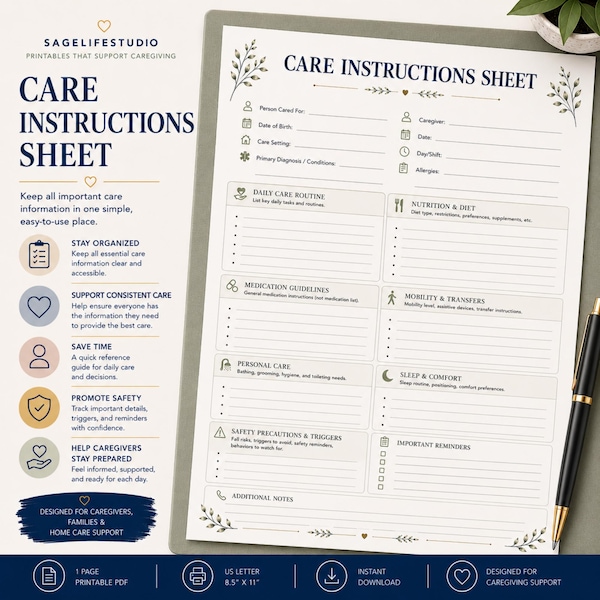
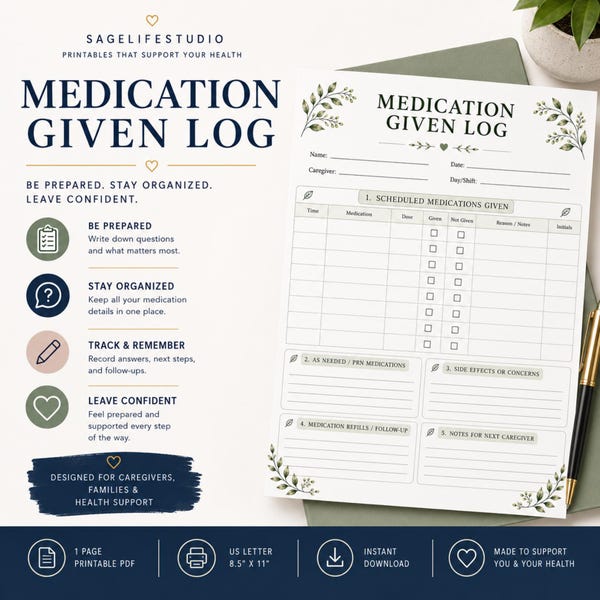
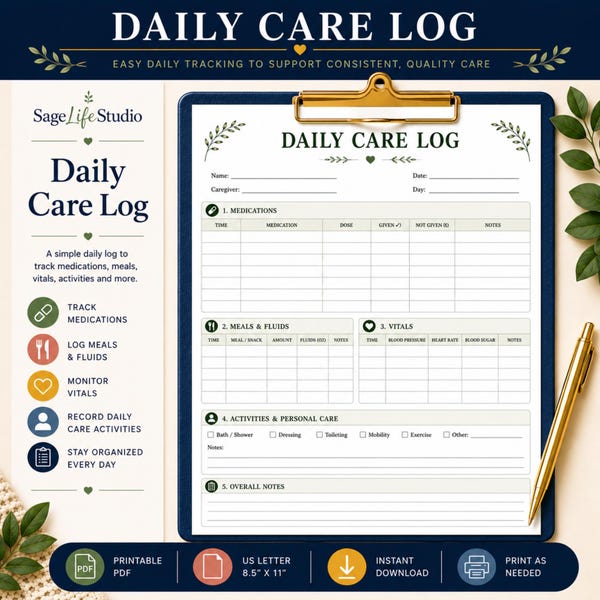
If you would rather start with finished pages than blank paper, you can browse printable binders, logs and information sheets on Etsy.
Frequently asked questions
What should I keep in an IEP binder?
Keep the current plan, past plans, progress reports, evaluations, meeting notes, a communication log, work samples and school forms. Add a snapshot page up front with school contacts so the key facts are easy to find.
How long should I keep school paperwork?
There is no single rule that fits every family. Many parents keep current and recent years in the binder and store older records in a labeled box. Ask your school team or a qualified professional about what to retain for your situation.
Does a school binder replace advice from the school team?
No. The binder only organizes documents and notes. Questions about services, rights or decisions should go to the school team or a qualified professional.