Medication Schedule Chart: How to Set One Up for a Household
A medication schedule chart is a one-page grid that shows each person in your household, the items they take as directed by their care team, and the times of day they are due, with a spot to check off each one. To set one up, copy the details from the pharmacy label or provider paperwork exactly as written, arrange them by time of day, and post the chart where everyone who helps can see it.
This guide is about organizing only. It is not medical advice, and it does not tell anyone what to take, how much or when. Always follow the care team’s instructions, and ask the pharmacist or provider’s office to clarify anything that is unclear. The chart is just a way to keep written information tidy and visible.
Why a household needs a shared chart
When several people live together, or when helpers rotate in and out, information tends to live in one person’s head. A shared chart replaces guesswork with a page anyone can read. A parent, an adult child, a sitter or a visiting relative can see at a glance what is listed and whether it has been checked off today.
It also saves time at appointments. Instead of reconstructing a list from memory, you can bring the chart, along with your medication log, and ask the provider to confirm that what you wrote matches their records.
What to put on the chart
Keep the chart focused on what was written by the pharmacy or provider. Do not paraphrase, round, or fill gaps from memory. A good chart includes:
- Person’s name and, if helpful, a note such as “allergies: see binder”
- Item name exactly as printed on the label
- Directions copied word for word from the label or paperwork
- Time slots such as morning, midday, evening and bedtime, matching the directions
- Check-off boxes for each day of the week
- Prescriber and pharmacy name and phone number
- Refill date or the date the supply is expected to run low
- Last reviewed date and who reviewed it
If a label is hard to read or two sources disagree, do not guess. Call the pharmacy or the provider’s office and write down what they confirm.
Set it up in five steps
- Gather everything in one place. Collect current labels, discharge papers and visit summaries. Our guide to organizing medical records at home can help you sort the pile first.
- Make one chart per person. Households that combine everyone on one grid usually end up with confusion. Separate pages can still share a clipboard or a binder section.
- Copy the details exactly. Transcribe directions from the label word for word. Ask a second person to read them back against the original.
- Arrange by time of day. Group entries under the time slots the directions give, so the person using the chart follows the day from top to bottom.
- Have the care team confirm it. At the next visit or pharmacy trip, ask whether the chart matches their records. Make corrections in a different color and date them.
Where to keep the chart
Choose a spot that is easy to reach but not on display to guests: the inside of a kitchen cabinet door, a clipboard by the coffee maker, or the front of a binder. Keep a spare copy in your medical binder and a photo of the current version on your phone. If young children or visitors are in the home, store any physical items as the pharmacy and care team direct, and keep the chart itself separate from them.
Handling changes without confusion
Changes are where charts go wrong. Treat every change as a new version rather than a scribble on the old page.
- Only update the chart when you have a written or verbally confirmed change from the care team.
- Print a fresh page, date it, and remove the old one so two versions never sit side by side.
- Keep old charts in the back of the binder for reference, marked “replaced” with the date.
- Tell everyone who helps that a new version is up.
Sharing the job with other helpers
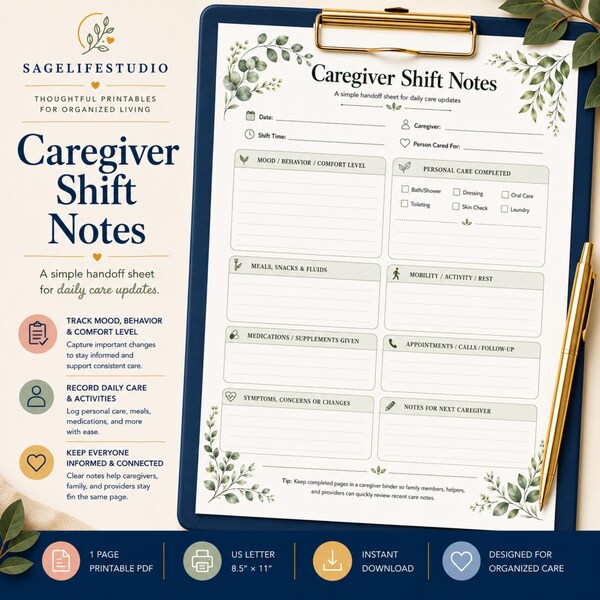
If more than one person is involved, agree on a few rules. Decide who updates the chart and who only checks boxes. Ask helpers to initial each entry they check off. Leave a notes line at the bottom for questions to raise at the next appointment, such as “label smudged, ask the pharmacy to reprint.” A short caregiver shift note at handoff time pairs well with the chart.
A simple monthly review
Once a month, sit down for ten minutes with the chart, the labels and your calendar. Check the refill dates, confirm nothing on the page is out of date, and note any questions for the next visit. If anything looks different from the paperwork, call the office and follow their instructions.
Quick checklist
- One chart per person, copied exactly from labels and paperwork
- Time slots that match the written directions
- Prescriber, pharmacy and refill dates listed
- Chart confirmed by the care team
- New dated version for every confirmed change
- Posted where helpers can find it, with a backup copy
- Monthly review on the calendar
Frequently asked questions
Ready-made printables to get you started
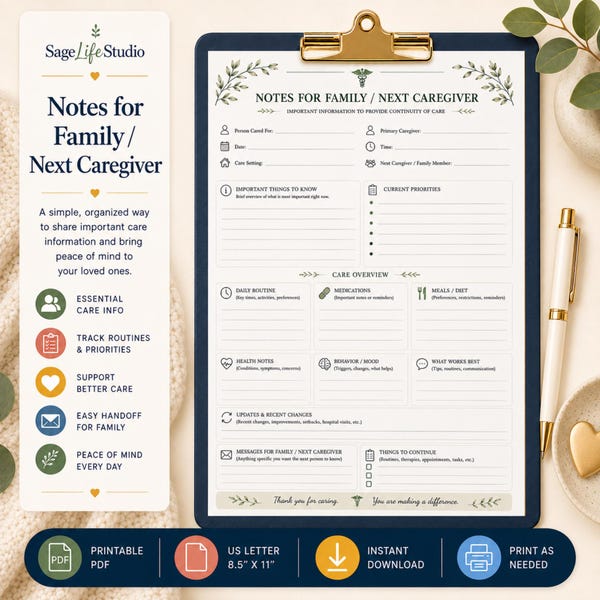
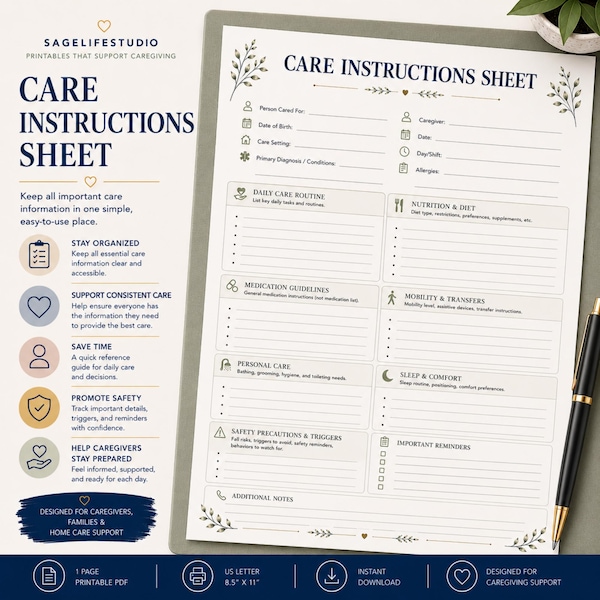
If you would rather start with finished pages than a blank sheet, you can browse printable caregiver binders, logs and trackers on Etsy.
Frequently asked questions
What should a medication schedule chart include?
List the person's name, each item exactly as written on the label, the directions as printed, time slots, check-off boxes, the prescriber and pharmacy, and refill dates. Follow the care team's instructions for anything health related.
How do I keep one chart for several family members?
Make a separate page for each person and keep the pages together on a clipboard or in a binder section. Separate pages reduce the chance of mixing up entries.
How often should I update the chart?
Update it only when the care team confirms a change, then print a new dated version and retire the old one. Review the whole chart once a month and ask the office about anything that does not match.