Nanny Weekly Schedule and Daily Routine Sheet: What to Include
A good nanny weekly schedule and daily routine sheet answers three questions at a glance: where do the kids need to be and when, what does a typical day look like, and what changes from one weekday to the next. Put the fixed times in a weekly grid, the everyday flow in a simple daily list, and keep both on one or two pages in the same spot every week.
This guide is about organizing information only. It is not medical, childcare or legal advice. If a child has health needs, follow the instructions from the family’s care team and use the sheet simply to keep those instructions written down where the nanny can find them.
Why two sheets work better than one
A weekly schedule and a daily routine do different jobs. The weekly schedule is about the calendar: school drop-off, lessons, playdates, appointments and standing commitments. The daily routine is about the rhythm: wake-up, meals, rest time, outdoor time and bedtime wind-down.
Splitting them keeps each page easy to read. When a Tuesday soccer practice moves, you change one cell on the weekly grid and the daily routine stays untouched. Parents also find it easier to review one page at a time during a weekly check-in.
What to put on the weekly schedule
Use a grid with the days across the top and time blocks down the side. Fill in only what is fixed, and leave open space for flexible time.
- School or daycare: drop-off and pick-up times, who does each, and early-release days
- Activities and lessons: location, start and end times, and what to bring
- Standing appointments: the time and place only, with details kept in a separate appointment log
- Playdates and visitors: who, where, and any pick-up arrangements
- Parents’ work hours: when each parent is reachable and the best way to reach them
- Nanny hours: start and end times for each day, plus any days off
- Errands or house tasks: only if they are part of the agreed job
Add a “this week only” box at the top for one-time changes such as a field trip, a half day or a holiday.
What to put on the daily routine sheet
List the order of the day in plain, time-stamped steps. Treat times as a guide, since children rarely follow a clock perfectly.
- Morning: wake-up, breakfast, getting dressed, anything to pack
- Midday: snacks, lunch, outdoor or play time, quiet time or nap windows
- Afternoon: pick-ups, homework or activities, snack
- Evening: dinner, bath, bedtime steps in the order the family uses
- Handoff: who the nanny updates and where the notes go at the end of the day
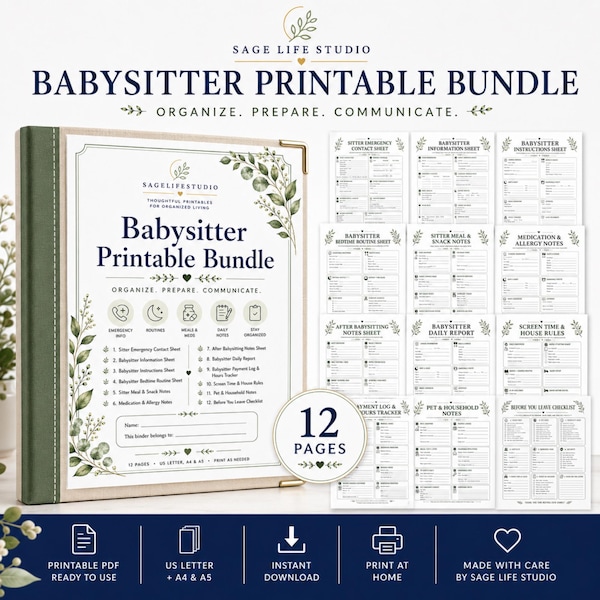
Add a short “how we do it here” line under each step, such as where the lunch containers are or which show is allowed. These small details save a lot of back-and-forth, much like the ones on a babysitter information sheet.
Keep health and safety details separate
Allergies, items given as directed and care-team instructions belong on their own page, copied exactly from the family’s source instructions, not rewritten on the schedule. The routine sheet can simply say “see allergy and care sheet” so the details stay in one place and cannot drift out of date. Put the emergency contact sheet right beside it.
How to lay it out
- Use a landscape grid for the week and a portrait list for the day
- Color-code lightly: one color per child or per type of event, no more than three
- Write times in one format, such as 3:30 pm, throughout
- Leave a notes column for questions the nanny wants to raise
- Date the sheet and keep the last few weeks in a binder pocket
Keeping it current
Set a standing five-minute check-in, perhaps Sunday evening or Friday afternoon, to confirm next week. Update the grid together, cross out what is finished and add new commitments right away. Whoever hears about a change first writes it on the sheet, so nobody relies on memory or a text thread that scrolls away.
A seasonal review helps too. Back-to-school, summer break and holiday weeks each change the shape of the day, so a fresh copy at each transition prevents old times from lingering.
Where to keep it
Keep the current week on the fridge or a clipboard by the door, and file older copies in a family binder with the contact list and any care instructions. If more than one adult shares the childcare load, a duplicate in a shared folder lets everyone see the same version.
Quick checklist
- Weekly grid with school, activities, pick-ups and parent availability
- Daily routine in time order with short household notes
- “This week only” box for changes
- Separate page for health and safety details, copied from the family’s instructions
- Emergency contacts beside the schedule
- Weekly check-in and dated copies filed together
Frequently asked questions
Ready-made printables to get you started
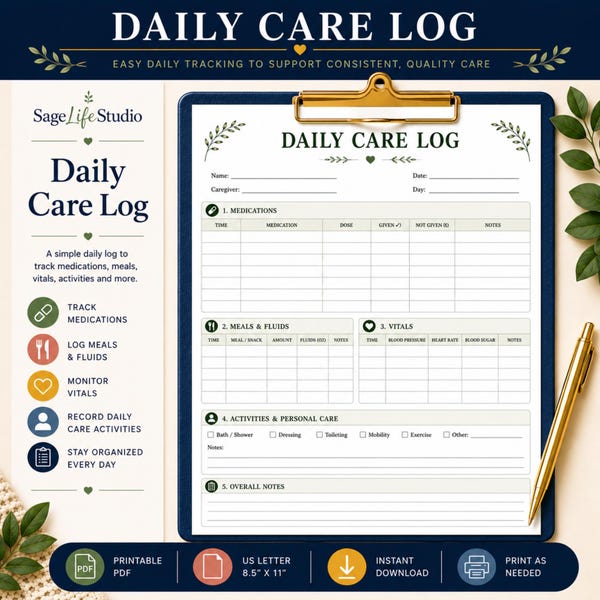
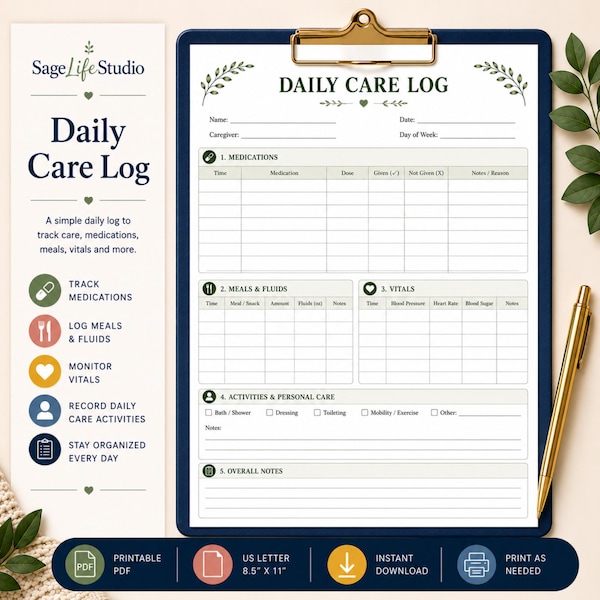
If you would rather start with finished pages than a blank sheet, you can browse printable family binders, logs and planners on Etsy.
Frequently asked questions
What should a nanny schedule include?
Include school and activity times, pick-up and drop-off details, the nanny's working hours, when each parent can be reached, and a space for one-time changes. Keep health and safety instructions on a separate page.
How detailed should a daily routine sheet be?
Detailed enough that someone new could follow the day, but short enough to read in a couple of minutes. Time-stamped steps with a one-line note on how your household does each one is usually plenty.
How often should the nanny schedule be updated?
Review it weekly and update it the moment something changes. Start fresh copies when the season, school year or work hours change.