Printable Binder vs Planner: Which One Do You Need?
Choose a binder when you need to keep information in one place: contacts, instructions, records and logs that other people may need to find. Choose a planner when you need to manage time: appointments, tasks, routines and deadlines. If you are caring for someone, running a household with a sitter, or managing a lot of paperwork, you will often want a small version of both.
This post is only about organizing. A binder or planner does not replace your care team, so follow their instructions on anything related to health, and ask what they would like you to record.
The simple difference
A binder is a reference tool. It holds the facts that do not change much day to day, such as phone numbers, allergy notes, insurance details and the written routine. A planner is an action tool. It tells you what happens on which day and what needs to get done.
A quick test: if the question is “where is that information?”, you need a binder. If the question is “what am I supposed to do on Thursday?”, you need a planner.
When a binder is the better choice
- Several people need the same information. A babysitter, a home aide or a relative can open one binder and find everything. Our guide on how to prepare a home for a substitute caregiver shows what to put where.
- You collect paperwork. Insurance letters, school documents, visit summaries and forms need sections, pockets and dividers.
- You hand over care regularly. Sitters, respite helpers and shift changes all work better with a fixed place to look.
- You need to bring information to appointments. Flipping to a labeled tab is faster than searching through loose papers.
The downside is that a binder is not built for scheduling. A binder with no calendar can leave you remembering dates on your own.
When a planner is the better choice
- Your main problem is time. Back-to-back appointments, school pick-ups and shifts need a weekly or monthly view.
- You are the only person using it. A planner can be personal and quick, with no need for sections that others will read.
- You want a routine. Daily and weekly layouts make recurring tasks easy to see.
- Your life changes week to week. Planners handle a moving schedule better than a binder of fixed pages.
The downside is that a planner is a poor home for long-term reference pages. Phone numbers scattered across weeks get lost.
A side-by-side look
| Question | Binder | Planner |
|---|---|---|
| Best for | Reference and records | Scheduling and tasks |
| Who uses it | Several people | Usually one person |
| Handles paperwork | Yes, with pockets and dividers | Not really |
| Shows what is coming up | Only with a calendar page | Yes |
| Good for handoffs | Yes | Partly |
Matching the tool to your situation
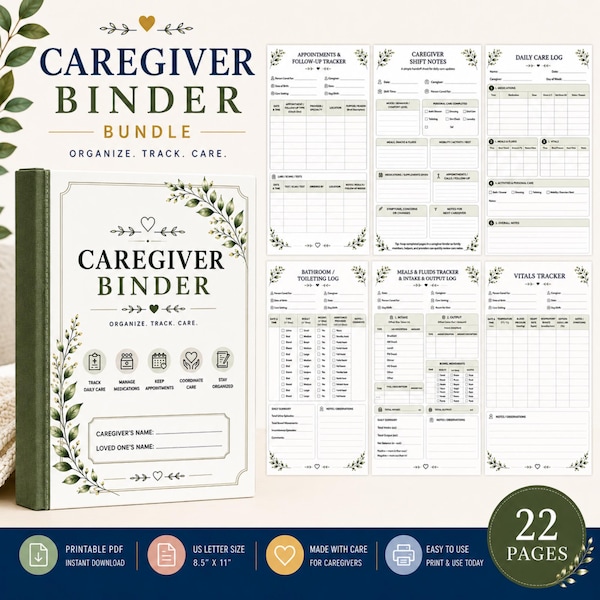
Family caregiver. Start with a binder for contacts, the medication list the care team gave you, and a daily log. Add a monthly calendar page for appointments. See what to put in a medical binder for ideas.
Parent of a child with extra needs. A binder usually comes first because of school and provider paperwork. Add a weekly planner page for therapy and school schedules.
Babysitter or nanny family. A short binder with an information sheet and routine, plus a simple weekly schedule. The babysitter information sheet is a good starting point.
Pet owner with a sitter. A binder-style sheet set is the better fit: feeding, vet details and emergency contacts. A planner only matters if you also track walks or visits.
Someone managing their own appointments. A planner may be enough, with a small folder for papers.
How to combine them without doubling the work
- Keep reference pages in the binder. Contacts, routines and instructions live there.
- Keep one calendar. Put it at the front of the binder, or keep a planner next to it, but not both with different dates.
- Choose a daily habit. For example, check the calendar page every morning and update the log each evening.
- Review monthly. Remove outdated pages and refresh contact details.
Quick checklist before you decide
- Who else will read this besides me?
- Do I mostly need to find information or manage time?
- How much paper do I need to store?
- Will I actually carry it or keep it in one spot?
- Can I start small and add pages later?
Frequently asked questions
Ready-made printables to get you started
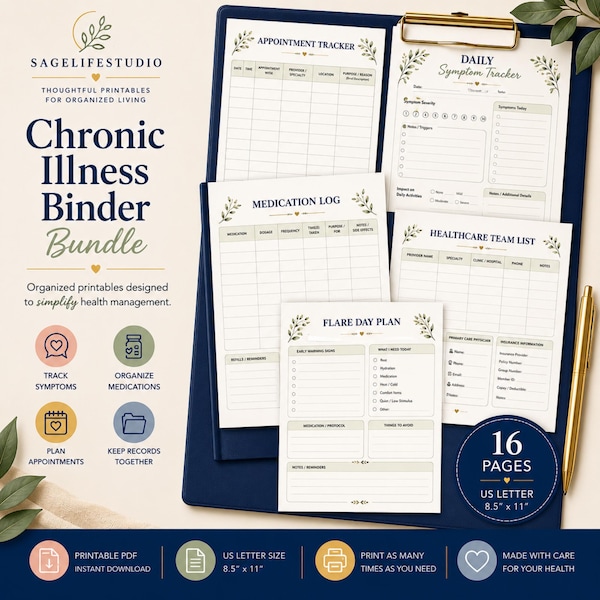
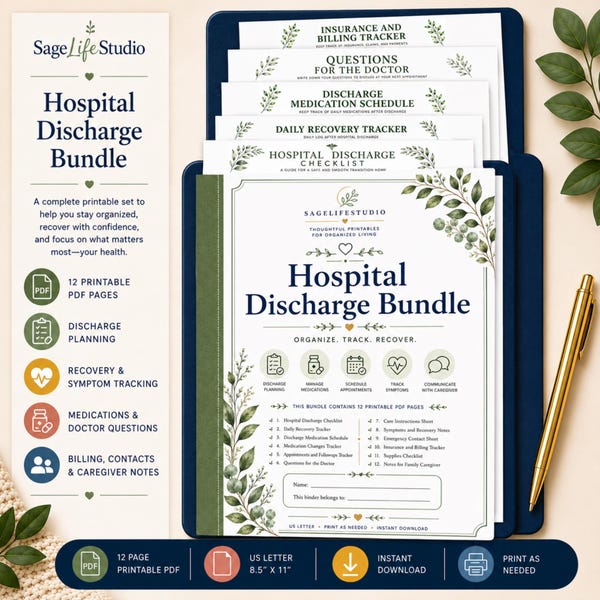
If you would like finished pages for either approach, you can browse printable binders, logs and planners on Etsy.
Frequently asked questions
What is the difference between a binder and a planner?
A binder stores reference information such as contacts, routines and records, while a planner organizes time, such as appointments and daily tasks. Many households use a binder as the home base and add a calendar page for scheduling.
Can one printable do both jobs?
Often a binder with a monthly calendar page covers both for light scheduling needs. If your schedule is very busy, a separate planner alongside the binder tends to be easier to keep up.
Which should I start with if I am new to caregiving?
Most new caregivers start with a binder, because contacts, instructions and logs are needed right away and can be shared with others. Always follow the care team's guidance on health matters.