Questions to Bring to a Doctor's Appointment: An Organizing Checklist
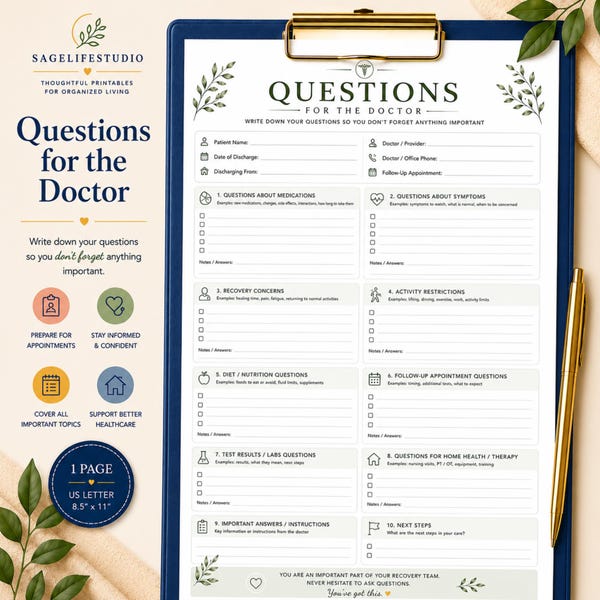
The best way to prepare questions for a doctor’s appointment is to write them down ahead of time on one page, put the most important ones first, and leave space beside each to record the answer. Visits are short and it is easy to forget what you meant to ask, so a prepared page keeps the conversation focused.
This post is about organizing your questions and notes, not about what to ask medically. Your care team knows your situation, so follow their instructions, and use the ideas below only to keep your information tidy.
Start collecting questions a week early
Keep a running page where you jot down questions as they come up. Put it somewhere you will see it, such as the front of your binder or on the fridge. When a thought hits you in the middle of a busy day, write it down on the spot instead of trusting yourself to remember.
If you are helping someone else, ask them and anyone else involved in their care whether they have questions too. A parent, sibling or home helper may have noticed something you have not.
Sort the list before the visit
Raw notes are rarely ready to use. Take five minutes the night before and do this:
- Circle your top three questions, the ones you would be unhappy to leave without asking
- Group similar questions together so you can ask them in one go
- Cross off anything you can answer yourself by checking your records
- Write each question as a short, complete sentence
Appointments often run behind, so asking your top three first means the essentials get covered even if time is tight.
Questions about organizing and following up
You do not need to be an expert to ask good practical questions. These cover logistics and clarity, and they work for almost any visit:
- What should I write down or keep track of before the next visit, if anything?
- Can you repeat the instructions so I can write them down exactly?
- Who should I contact with questions after today, and what is the best way to reach them?
- When is the next appointment, and is there anything I should bring or prepare?
- Is there written information I can take home?
- Are there other specialists or tests I should expect to hear about, and who arranges them?
Add your own questions about the specific situation to this list. Leave the medical decisions to the professionals.
What to bring
Pack a small folder or binder section the night before so you are not hunting for papers in the morning:
- Your question page and a pen
- Insurance card and photo ID
- A current list of medications and supplements, copied from your medication log
- Any notes, logs or summaries your care team asked you to keep
- Recent paperwork, test results or referral letters, filed in your home medical records system
- A list of the other doctors and pharmacy involved, with phone numbers
If you are not sure what the office needs, call ahead and ask. Offices are used to this question.
Record the answers as you go
Use a simple page with three columns: the question, the answer in the care team’s words, and any follow-up you need to do. Writing as you go is useful, but do not worry about neat handwriting. You can tidy it afterward.
If you cannot write fast enough, ask the provider to pause or repeat. Some people also bring a second person to take notes while they listen. If you would like to record audio, ask permission first, since rules differ between offices and states.
Before you leave, read back what you wrote and confirm that you understood it. Ask about anything unclear right then, since that is easier than calling later.
Do a five-minute debrief afterward
As soon as you get home or to the car, review your notes while the visit is fresh:
- Fill in any gaps you remember
- Write the date and the name of the provider at the top
- Add follow-up tasks to your calendar, such as booking the next visit or picking up a prescription
- File the page in your binder behind the right tab, and give a copy to anyone else involved in care
If several people share caregiving, a quick message or a shift notes page can pass along what changed. Remember that instructions come from the care team, so share their words rather than your interpretation.
Quick checklist
- Keep one running question page and add to it all week
- Pick your top three questions and ask them first
- Pack ID, insurance card, medication list and relevant paperwork
- Leave space beside each question for the answer
- Read the notes back before you leave
- File the page and add follow-ups to your calendar within a day
Frequently asked questions
Ready-made printables to get you started
If you would rather start with finished layouts than a blank page, you can browse printable logs and binders on Etsy.
Frequently asked questions
How many questions should I bring to a doctor's appointment?
There is no set number, but appointments are short, so it helps to prioritize. Write everything down, then mark your top three so the most important ones are asked first.
Can I bring someone with me to take notes?
Many people do. Check with the office if you are unsure about their visitor policy, and tell the person ahead of time what you would like them to write down.
Is a list of questions a substitute for medical advice?
No. A question list is only a way to organize your thoughts and notes. Your care team gives the guidance, and you should follow their instructions about your health.