Symptom Tracker for Chronic Illness: What to Log and How to Keep It Going
A symptom tracker is simply a dated record of what you or a family member noticed each day, written in the same format every time. For a long-term condition, the most useful version is short: a date, a few consistent fields, and a line of free-form notes. If you can fill it in within two minutes, you are far more likely to keep doing it.
This guide covers how to organize a tracker, not how to interpret one. A tracker is a notebook, not a diagnostic tool. Your care team decides what matters and what to do about it, so follow their instructions and ask them what they would like you to write down.
Ask your care team what they want tracked
Before you design anything, ask the doctor’s office or nurse what, if anything, they would find useful to see. Some people want a particular item logged every day, and others want only major changes. Write their answer at the top of the first page so you are not guessing later.
If you are tracking for someone else, such as a parent or child, agree with that person on what gets written down and who can see it. These are private notes.
What to log
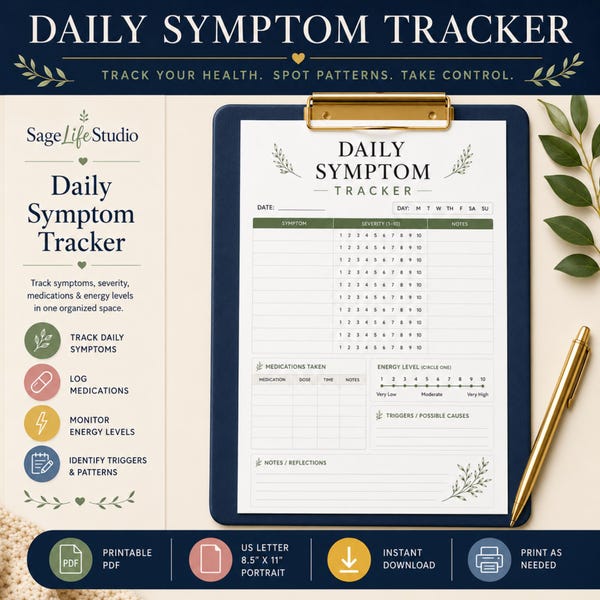
Keep the fields few and the wording plain. A good starting set looks like this:
- Date and time: include the time of day if it matters to your routine
- What you noticed: a short description in your own words
- Rating: a simple 0 to 10 scale or a three-level scale (low, medium, high), whichever you will stick with
- Activities and context: meals, sleep, outings, stress or travel that day
- Medications and treatments taken: record what was taken and when, exactly as prescribed; your medication log can hold the details
- Questions to ask: anything you want to bring up at the next appointment
Resist the urge to add more columns. A tracker with ten fields gets abandoned in a week. You can always add one later if your care team asks.
Use the same words every time
Consistency matters more than detail. Pick a few labels and reuse them, so that entries from different weeks can be compared at a glance. If you rate on a 0 to 10 scale, decide what the ends mean once and write that on the first page. If more than one person writes in the tracker, make sure everyone uses the same scale.
Avoid guessing at causes in your entries. Write what you observed, not what you think it means. “Tired by 2 pm, rested for an hour” is a clean note. Leave interpretation to the professionals.
Pick a format you will actually use
There is no right answer, only the one that fits your day.
- Paper: a printed page or notebook that lives in one spot, such as the nightstand or kitchen counter, is hard to forget
- Phone notes or a spreadsheet: easy to search and always with you, but only useful if you open it daily
- Both: write quickly on paper and copy a weekly summary into a digital file
Whatever you pick, store it with your other records. A tracker works best as one section of a larger home medical records system.
Build a habit that lasts
Most trackers fail because they depend on remembering. Attach the entry to something you already do:
- Fill it in right after brushing your teeth or taking your evening routine
- Set a phone alarm for the same time each day
- Keep the pen clipped to the page
- If you miss a day, leave it blank and carry on; do not try to reconstruct it from memory
A few honest entries are better than a perfect month you abandon. If daily logging feels like too much, ask your care team whether a weekly summary would be enough.
Prepare for appointments
Before each visit, flip back through the last few weeks and write a short summary on one page: the dates covered, anything you want to mention, and your questions. Bring the tracker, but lead with the summary so the visit stays focused. After the appointment, write down what the care team said and any instructions in their words, then file the notes in your binder. If another person helps with care, a shift notes page can pass along day-to-day updates.
Quick checklist
- Ask the care team what they want recorded
- Choose 4 to 6 fields and a rating scale, and write the scale on page one
- Keep entries short and factual
- Attach the habit to an existing routine
- Review and summarize before each appointment
- Store the tracker with the rest of the records, kept private
Frequently asked questions
Ready-made printables to get you started
If you would rather begin with finished layouts than a blank page, you can browse printable logs and binders on Etsy.
Frequently asked questions
What should I include in a symptom tracker?
Ask your care team first. In general, a date, a short description in your own words, a simple rating scale, relevant daily context and any questions for your next appointment are enough to keep the log manageable.
How often should I fill in a symptom tracker?
Whatever your care team recommends. If they have no preference, a short daily entry at the same time each day is easiest to keep up, and a quick weekly summary can work if daily logging is too much.
Is a symptom tracker the same as medical advice?
No. A tracker is only a way to keep your own notes organized so they are easy to share. It does not diagnose or treat anything, and your care team should guide any decisions about health.