Insurance and Billing Paperwork: How to Keep It Organized
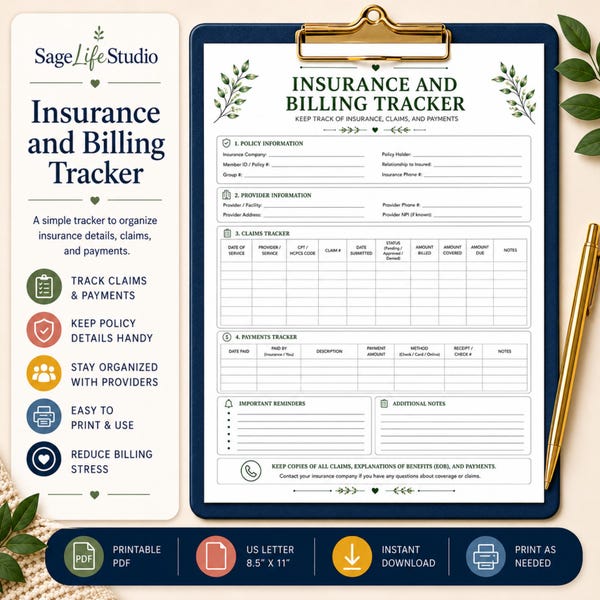
The easiest way to keep insurance and billing paperwork under control is to use one home base, a small set of labeled sections, and a short weekly habit of filing what came in. You do not need a complicated system. You need one place where every statement, bill and receipt lands, and a way to match them to each other later.
This post is about organizing paper only. It is not insurance, medical, financial or legal advice. For questions about what a plan covers or what you owe, contact your insurer, the provider’s billing office or a qualified professional, and follow your care team’s instructions on anything health related.
Pick one home base
Choose a single binder, accordion folder or file box and keep it where the whole household can find it. Scattered piles are the main reason bills get paid twice or missed. If you are managing paperwork for a parent or another family member, keep their section separate from your own so nothing gets mixed up. Our guide to organizing a parent’s paperwork when you become a caregiver covers the wider set of documents.
Set up five simple sections
Tabs or dividers with plain labels work best:
- Cards and plan details. Copies of insurance cards (front and back), member and group numbers, and the customer service phone number from the card.
- Open items. Anything that still needs action: a bill to pay, a claim to check, a call to make.
- Explanation of benefits (EOBs). The statements insurers send after a claim. Keep them in date order.
- Bills and receipts. Provider bills, pharmacy receipts and proof of payment.
- Closed items. Finished matters, kept for as long as you decide to hold them.
Separate sections by person if more than one family member has paperwork. Many families add a divider per person rather than per insurer.
Use the three-way match
When a bill arrives, set it beside the matching EOB and the visit record. Check that the dates, provider names and descriptions line up, and note anything that looks different. If something does not match, that is a reason to call the billing office or insurer and ask, not a reason to guess. The point of keeping papers together is that you can make that call with everything in front of you.
A doctor appointment log makes this much easier, because you already have the visit date and provider written down.
Keep a simple call log
Whenever you speak with an insurer or billing office, write down the date, the person’s name, what you asked and what they said, plus any reference number. One page at the front of the “Open items” section is enough. When a question drags on for weeks, this log saves you from repeating yourself and gives you a record of who said what.
A short weekly routine
Ten minutes once a week beats a big cleanup once a year. Try this:
- Put every new piece of mail into the “Open items” section as it arrives.
- Match new bills to EOBs and visit notes.
- Note due dates on a calendar or on the paper itself.
- Move finished items to “Closed items” after you have confirmed payment.
- Add any new call notes.
Setting a repeating reminder on your phone helps the routine stick.
What to keep, and for how long
Retention advice depends on your situation. Tax-related records, for example, may follow different rules than routine paperwork, and some documents are worth keeping indefinitely. Ask your tax preparer, insurer or another qualified professional how long to hold specific documents rather than relying on a general rule. When in doubt, keep the item and note the date you filed it.
Protect private information
Insurance paperwork often includes member numbers, addresses and health details. Store the binder somewhere private, shred papers you no longer need rather than putting them in the trash whole, and be careful when photographing documents, since images can end up synced to places you did not intend.
Take it on the go
If you carry paperwork to appointments, bring only what you need: the insurance cards, a current contact sheet and the open items for that provider. Leave the rest at home. A slim folder is easier to keep track of than the full binder.
Frequently asked questions
Ready-made printables to get you started
If you would like finished pages for tracking appointments, contacts and paperwork, you can browse printable binders, logs and planners on Etsy.
Frequently asked questions
How should I organize insurance paperwork at home?
Use one binder or folder with sections for insurance cards, open items, explanations of benefits, bills and receipts, and closed items. Filing new mail weekly keeps it manageable.
What is the best way to match bills to insurance statements?
Lay each bill next to its explanation of benefits and your visit record, then compare dates, providers and descriptions. If anything looks off, contact the billing office or insurer to ask about it.
How long should I keep medical bills and insurance papers?
It depends on the document and your circumstances, so ask your insurer, tax preparer or another qualified professional. Until you know, keep the papers and note the date you filed them.