Doctor Appointment Log: How to Track Visits and Follow-Ups
A doctor appointment log is a simple running list of visits: the date, who you saw, what was discussed in your own words, and what happens next. The easiest way to start is a single page per person with a table, kept in the front of a binder or in a notes app, and updated within a day of every visit.
This guide is about organizing only. It is not medical or legal advice, and a log does not replace anything a provider tells you. Always follow the care team’s instructions, and ask them to clarify anything that is unclear. The log simply helps you remember what was said and what is still waiting to be done.
Why keep an appointment log
Visits blur together, especially when you are coordinating care for a parent, a child or yourself. A log helps you answer everyday questions quickly: When was the last visit? Who did we see? Did anyone say to come back in three months? Did we ever get that referral scheduled?
It also helps when more than one person is involved. A relative or sitter who takes someone to an appointment can read the last entry and walk in prepared, and write a new entry before handing things back.
What to record for each visit
Keep each entry short so you will actually fill it in. These fields cover most needs:
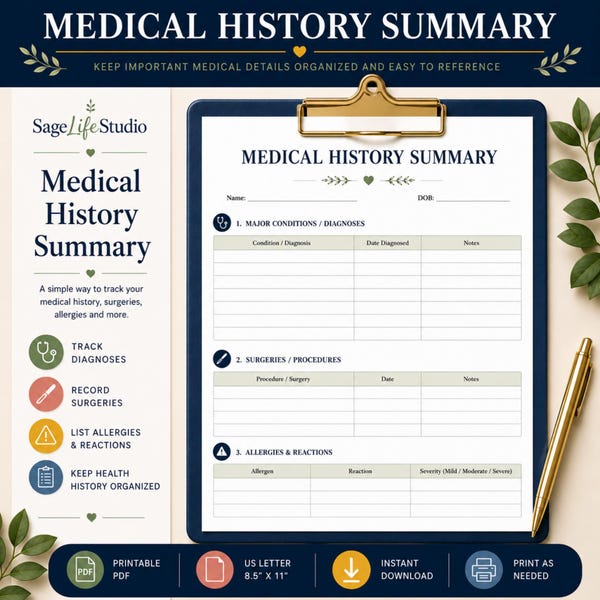
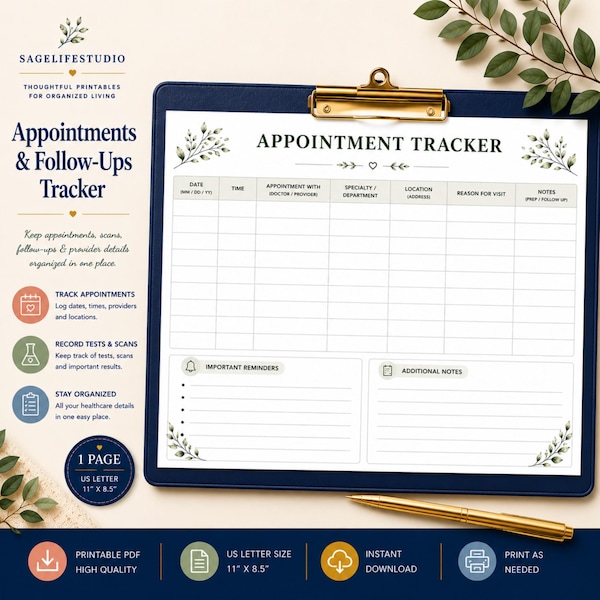
- Date and time of the visit
- Provider and clinic: name, specialty and phone number
- Reason for the visit, as stated on the appointment
- Who attended: the patient, plus any family member or caregiver who came along
- What was discussed, in the provider’s words, with anything you are unsure about marked with a question mark
- Instructions given, copied exactly from the visit summary or paperwork
- Follow-ups: tests, referrals, return visits and who is responsible for booking each
- Paperwork received: visit summary, forms, lab orders, with a note on where they were filed
If you are unsure what a note means, ask the office to confirm it rather than guessing. Write down only what you were told or given.
Set up the log in four steps
- Pick one home for it. A page in your medical binder, a dedicated notebook or a spreadsheet all work. What matters is that everyone involved knows where it lives.
- Create one log per person. Mixing family members on a single page gets confusing fast.
- Add a follow-up column. Give each follow-up a status such as “to book,” “booked” or “done,” so open items stand out.
- Start with the past year. Fill in recent visits from old paperwork or your calendar so you have a baseline. Our post on organizing medical records at home shows how to sort the papers first.
Track follow-ups separately
Follow-ups are the part most people lose track of. Besides the main log, keep a short “open items” list at the top of the page. Each line gets a task, a due date and a checkbox. For example: call to schedule the follow-up visit, pick up the lab order, send the form to the insurer.
When you complete one, check it off and note the date. Once a month, glance at the list and move anything stale to the front of your to-do list. If a deadline was given by the provider, follow that timing and call the office with any questions.
Before and after each appointment
A few minutes on either side of a visit makes the log far more useful.
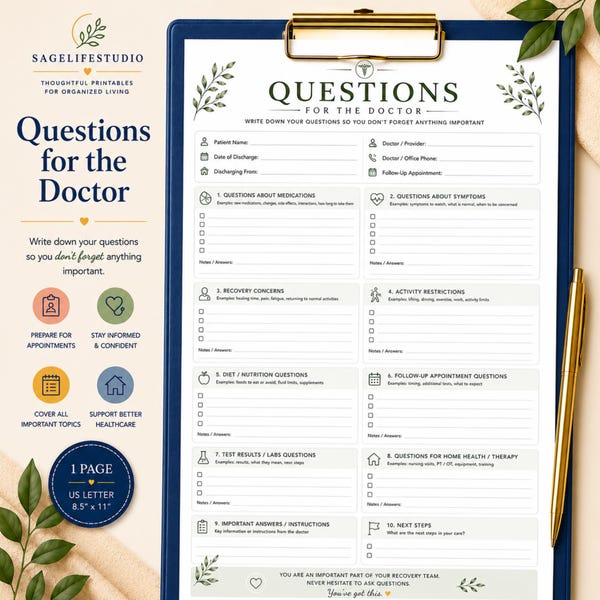
Before: read the last entry, write down your questions (see questions to bring to a doctor’s appointment), and gather insurance cards, a list of current medications as written on the pharmacy label or provider paperwork, and any forms.
After: fill in the entry while it is fresh, ideally in the parking lot or waiting room. Add follow-ups to your calendar immediately. File any paperwork in the same sitting so it does not pile up in a bag.
Keeping the habit going
Logs fail when they feel like homework. Keep the format light: a few lines per visit is enough. Leave the log in the same bag or folder you take to appointments so it is always at hand. If you share the job, agree on who writes the entry, and put the date and initials on each one. Consider a quick monthly check, perhaps the first Sunday, to review open items and upcoming visits.
Quick checklist
- One log per person, in a place everyone knows
- Date, provider, reason and attendees for each visit
- Instructions copied exactly as given
- Follow-ups listed with status and who books them
- Paperwork filed the same day
- Monthly review of open items
Frequently asked questions
Ready-made printables to get you started
If you would rather start with finished pages than a blank sheet, you can browse printable caregiver binders, logs and trackers on Etsy.
Frequently asked questions
What should a doctor appointment log include?
Record the date, provider, reason for the visit, who attended, what was discussed, instructions as given, follow-ups and where the paperwork was filed. Follow the care team's instructions for anything health related.
Should I keep a paper log or a digital one?
Either works. Paper is easy to hand to a family member or sitter, while a spreadsheet or notes app is searchable. Pick the one you will update within a day of each visit.
How do I keep track of follow-up appointments?
Keep an open items list at the top of the log with a due date and a checkbox for each follow-up, and add the date to your calendar right away. Call the office if you are unsure about timing.