Senior Caregiving Binder: What to Include
A senior caregiving binder is a single, organized folder that holds everything someone would need to step in and help care for an older adult: contacts, a medication list copied from the prescriber, appointment notes, daily logs and a map of where important paperwork lives. If you can hand it to a sibling, a home aide or an emergency room nurse and they can find what they need in a minute, it is doing its job.
This is an organizing guide, not medical or legal advice. Always follow the instructions of your loved one’s care team, and ask a qualified professional about legal or financial documents. The binder only keeps information in one place.
Why a binder helps
Care for an older relative tends to spread across many people: a primary doctor, specialists, a pharmacy, family members, maybe a paid aide. Information ends up in phone notes, on sticky notes and in one person’s memory. A binder gives everyone the same source of truth, and it works when the power is out or the phone is dead.
It also protects you. If you get sick or need a weekend away, a clear binder means the next person does not have to call you ten times. Our respite care information sheet guide covers that handoff in more detail.
Section 1: the basics page
Put one page at the very front with the essentials.
- Full name, date of birth and a recent photo
- Address and phone number
- Primary contact and a backup contact
- Preferred hospital and pharmacy
- Where the binder lives and who has a copy
Add a short note about communication, such as hearing or vision needs, preferred name and the best time of day to talk about important things. Keep it factual.
Section 2: contacts
Build a contact list that goes beyond family.
- Doctors and specialists, with the practice name and phone number
- Pharmacy and any home health or aide agency
- Neighbors or friends with a spare key
- Insurance companies and member services numbers
- Faith community, social worker or case manager if there is one
Our emergency contact sheet guide shows a layout you can copy. Keep a one-page version on the front of the refrigerator or by the door as well.
Section 3: medications and allergies
Copy the current medication list exactly as the prescriber or pharmacy gave it: name, the amount and schedule written on the label, and what each is for as stated by the care team. Note allergies as reported by the doctor. Add the date you last updated the list.
Do not guess, round or edit these details. If something looks different from last time, call the pharmacy or doctor and ask. A dated log of what was given and when can help the whole household stay on the same page; see our medication log guide for a simple format.
Section 4: appointments and visit notes
Keep a running appointment log with the date, provider, reason for the visit, and any follow-up the provider asked for. Leave room for a few lines of notes written during the visit, such as instructions you were given or questions to raise next time.
Bring the binder to appointments. Writing a short list of questions beforehand makes the visit go further.
Section 5: daily care log
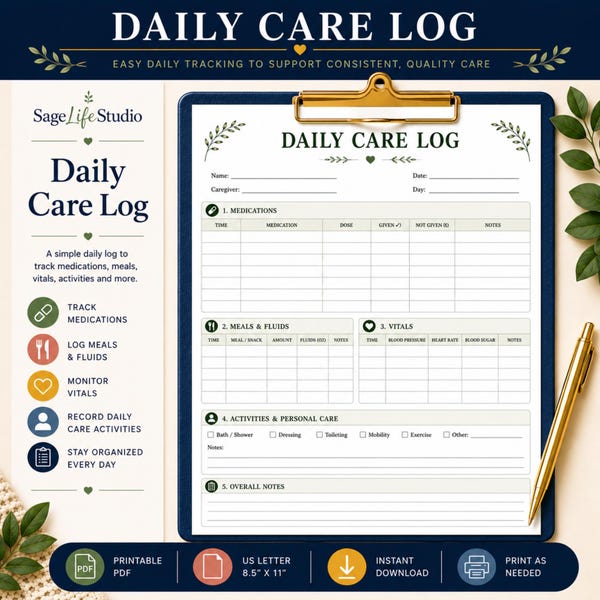
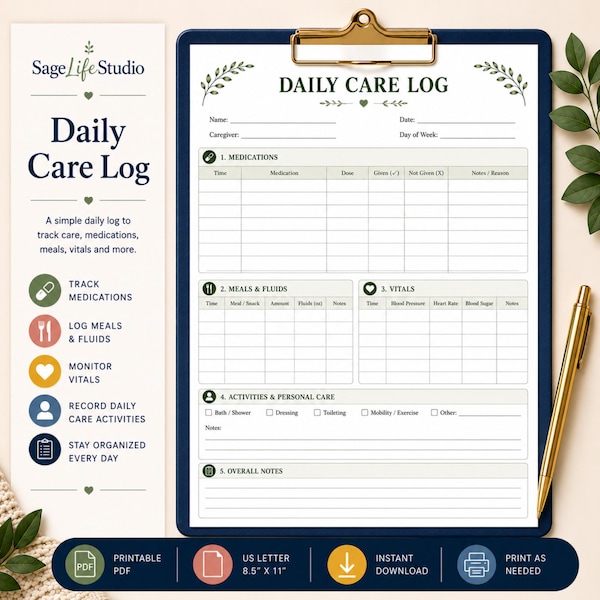
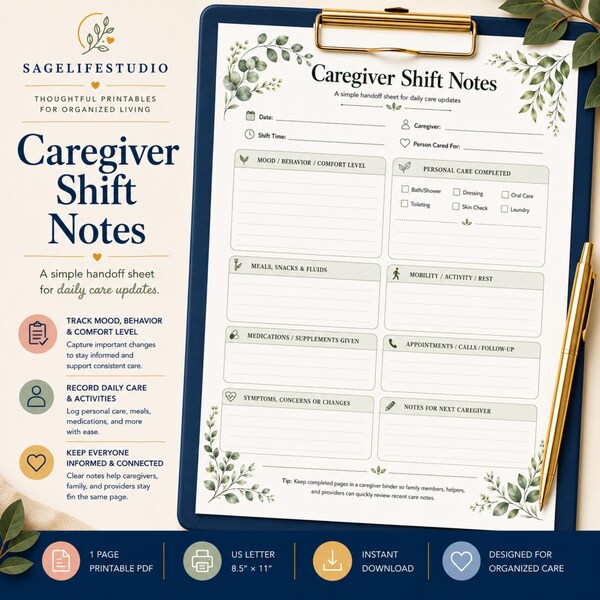
A simple daily page can track meals, activity, outings, visitors and anything you want to mention to the care team. Keep entries short and factual so that a different person on the next shift can read them quickly. If you are not sure whether something matters, write it down and let the care team decide.
Section 6: paperwork map
You do not need the original documents in the binder. You do need to know where they are. List each item and its location:
- Insurance cards and policy information
- Medicare or other benefits paperwork
- Power of attorney and healthcare proxy documents, if they exist
- Wills and advance directives, if they exist
- Bank, bill and subscription list
- Deeds, vehicle titles and tax records
Make photocopies of the essentials and store them in a clearly labeled pocket. Ask an attorney or financial professional if you have questions about what to keep or how to set documents up.
Section 7: emergency and hospital pages
Add a page that is ready to grab if there is an ER visit: a summary of conditions as listed by the doctors, the medication list, allergies, insurance card copies and emergency contacts. Our hospital stay checklist walks through what else to pack and track.
How to set it up
- Buy a 1.5 to 2 inch binder, tabbed dividers and clear sheet protectors.
- Make one tab for each section above.
- Fill in the basics page and contacts first, since they matter most.
- Add medications by copying from the pharmacy printout.
- Set a monthly reminder to review and update.
Review the whole binder every few months and after any hospital stay or medication change. Cross out old pages with a date rather than throwing them away, in case you need to look back.
Quick checklist
- Basics page with photo and contacts
- Doctors, pharmacy, agency and insurance numbers
- Medication and allergy list copied from the care team
- Appointment log and visit notes
- Daily care log
- Paperwork map and photocopies
- Emergency and hospital summary page
Frequently asked questions
Ready-made printables to get you started
If you would rather start with finished pages than blank paper, you can browse caregiver binders, medication logs and daily care printables on Etsy.
Frequently asked questions
What should go in a senior caregiving binder?
Include a basics page, contacts, a medication and allergy list copied from the care team, an appointment log, daily care notes, a map of where important paperwork is kept and an emergency summary page.
Where should I keep the caregiving binder?
Keep it somewhere easy to find, such as a kitchen shelf or by the door, and tell family and helpers where it is. Keep a copy of the emergency page on the refrigerator and take the binder to appointments.
How often should I update the binder?
Review it every few months and after any hospital stay, appointment with changes or medication update. Date each update so everyone knows which pages are current.