Allergy Information Sheet for Babysitters, Schools and Sitters: What to Write Down
A good allergy information sheet is one page that names the allergy, lists what to avoid, says what the care team has told you to do if there is a reaction, and gives phone numbers. Write it in plain words, keep it where anyone filling in can find it, and hand a copy to every babysitter, school, camp and sitter.
This is an organizing guide, not medical advice. Your doctor or allergist decides what counts as an allergy, what to avoid and what to do in an emergency. The sheet only puts those instructions in one place so they are easy to read when you are not there. Copy wording from your care team’s written plan rather than guessing, and ask the office if anything is unclear.
Why a written sheet matters
Verbal instructions get lost. A sitter who hears “she can’t have nuts” may not know whether that includes granola bars, shared utensils or the bakery treat a grandparent brings. A single page removes the guesswork and lets a new person get up to speed in a minute or two.
It also helps the people who are not the main caregiver: a grandparent, a substitute at school, a house sitter or a neighbor. If you already keep a babysitter information sheet, the allergy page can sit right behind it.
What to include
Keep the top of the page short and easy to scan. Details can follow below it.
- Full name, date of birth and a recent photo
- The allergy or allergies, written exactly as your care team states them
- Foods, products or situations to avoid, including hidden sources you have been told about, such as certain sauces, snack brands, soaps or pet foods
- Signs to watch for, copied from your care team’s written plan
- The action plan your care team gave you, copied word for word, or a note on where the original plan is kept
- Where any prescribed emergency supplies are stored, who has been shown how to use them and the instructions that came with them
- Emergency contacts in order of who to call first
- Doctor or allergist name and office phone number
- Preferred hospital or urgent care, if your family has one
- Date you last reviewed the sheet
Avoid adding your own advice about doses or treatments. If your care team gave a written emergency plan, attach it and let it speak for itself.
Writing it so it is easy to follow
Use short sentences and clear headings. Put the most important line at the top, for example “Peanut allergy: no peanuts or foods that list peanuts. Read every label.” Say what to do, not only what not to do, and name specific examples from your own home such as “the snack drawer on the left is safe; the pantry shelf is not.”
Make a note of anything that confuses people. Common examples include “may contain” labels, restaurant meals, birthday treats, craft supplies and shared drinks. If you have been told something about these by your care team, write it down in their words.
Different versions for different people
One master sheet works, but you may want to trim it for each reader.
Babysitters and nannies. Include the full sheet, the snack and meal rules for your kitchen, and a line asking them to call you first for any question about food. A nanny schedule and routine sheet can carry mealtimes alongside it.
Schools and camps. Most have their own forms and require paperwork from the care team. Ask what they need, then keep your own copy of everything you submit. Your sheet is a backup, not a replacement.
Pet sitters and house sitters. Allergies can involve household items, such as pet foods or cleaning products. List what to keep out of reach and what to avoid bringing in. Our house sitter instructions guide covers the rest of the house details.
Relatives and friends hosting a visit. A short version with the avoid list and phone numbers is usually enough.
Where to keep copies
Place the original in your medical or family binder, behind the emergency contact page. Put a second copy on the fridge or inside a kitchen cabinet door, where a sitter will see it. Keep a photo of it on your phone, and give each regular caregiver a printed copy in a sleeve. If you are building a binder from scratch, start with our guide on how to make a medical binder for a child.
A quick review routine
Check the sheet at the start of each school year, after any appointment where something changes, and before a trip or a new sitter. Write the review date at the bottom, and throw out old copies so nobody uses outdated information.
Quick checklist
- One page, with the allergy and avoid list at the top
- Care team’s instructions copied exactly or attached
- Emergency contacts and doctor’s number
- Location of any prescribed supplies noted
- Review date written on the page
- Copies at home, in the bag, on your phone and with each sitter
Get organized
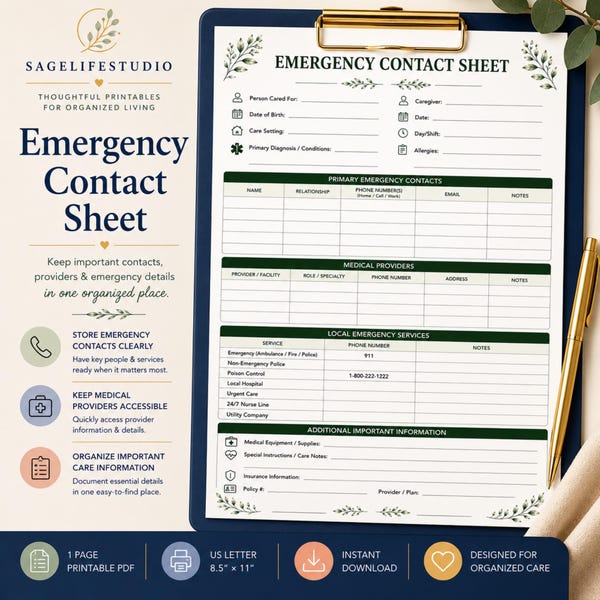
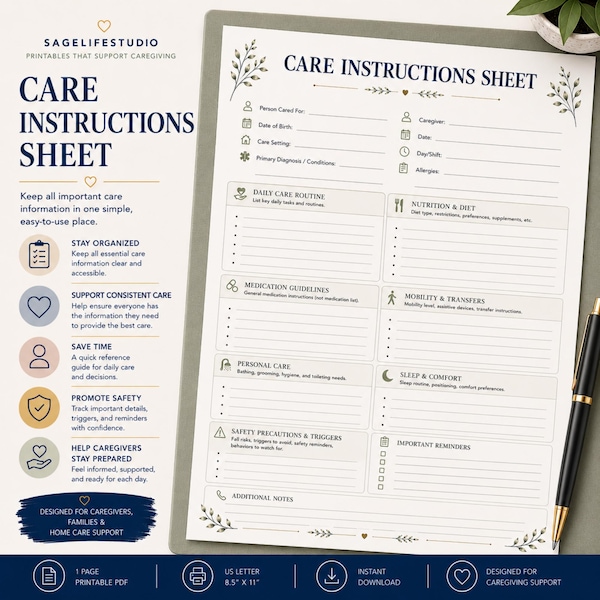
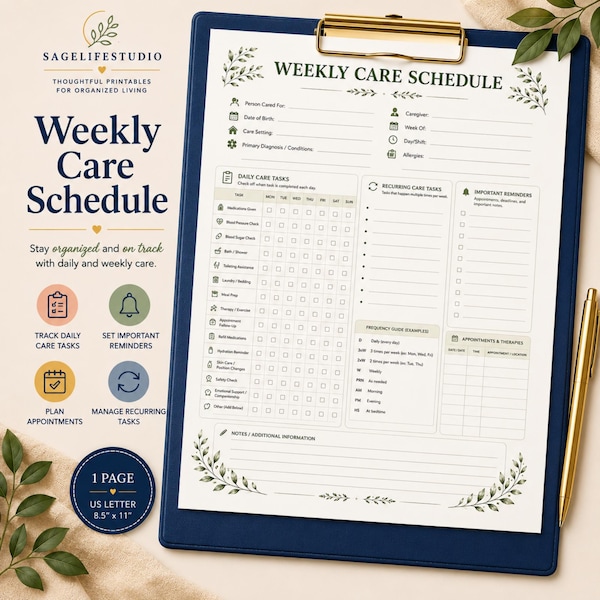
Ready-made printable pages can save you from starting with a blank sheet. Browse the binders and logs at SageLifeStudio on Etsy and print what fits your household.
Frequently asked questions
What should an allergy information sheet include?
Include the child's name and photo, the allergy as written by the care team, foods or items to avoid, the care team's written action plan or where it is kept, emergency contacts, and the date you last reviewed it.
Can a printed sheet replace the school's allergy forms?
No. Schools and camps usually have their own forms that often need your care team's signature. Use your sheet as a home reference and a handout for sitters, and follow the school's process for official paperwork.
How often should I update an allergy sheet?
Review it whenever your care team changes anything, at the start of each school year, and before a trip or new sitter. Write the review date on the page so people can tell it is current.