Caregiver Burnout Prevention: Organizing Your Own Schedule and Breaks
The most practical way to protect your own time as a caregiver is to put your breaks on the calendar the same way you schedule appointments, then back them up with a named stand-in. A break that is written down, with a day, a time and a person covering, is far more likely to happen than a break you hope to find.
This post is about organizing only. It is not medical or mental health advice. If you are feeling worn down, please talk with your own doctor or a counselor, and follow the care team’s instructions for the person you look after.
Why your own schedule needs a page
Caregiving tends to expand. Appointments, refills, meals and phone calls fill every gap, and your own needs slip to the bottom of the list because nobody else is writing them down. Treating your time as a real calendar item makes it visible to you and to everyone helping.
Step 1: Map a typical week
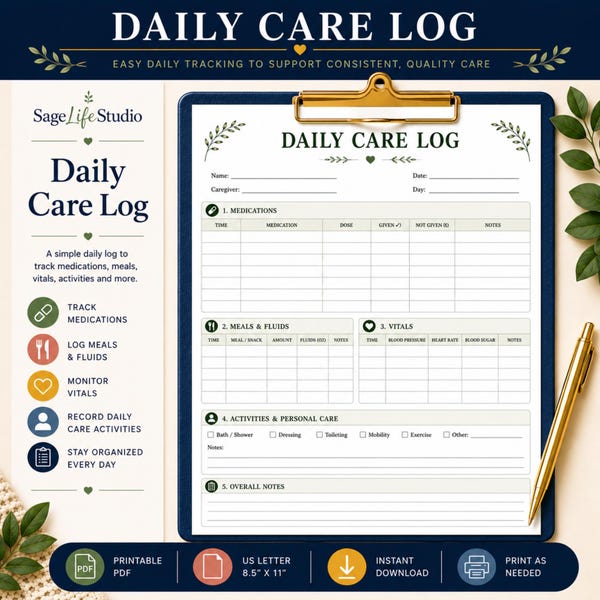
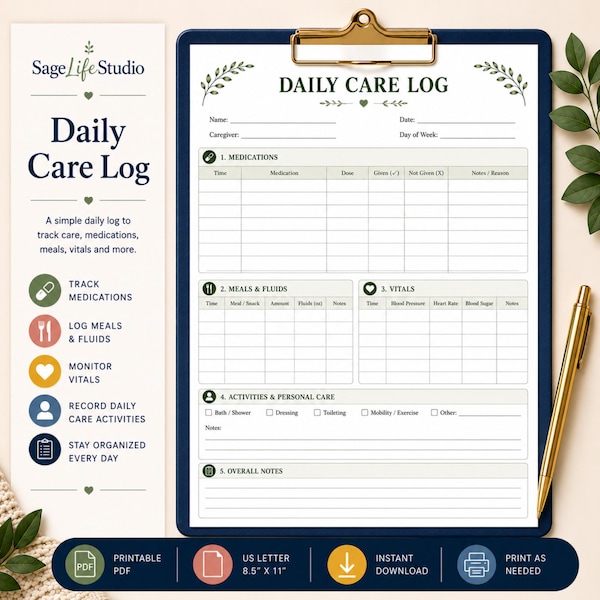
Take a blank weekly page and mark the fixed points first: appointments, medication times, meals, and anything else that cannot move. If you already keep a caregiver daily log, use it to see where your hours really go rather than where you assume they go.
What remains are your possible break windows. Even small ones count.
Step 2: Block out breaks in three sizes
Different breaks do different jobs, so plan a few sizes:
- Short (10-20 minutes daily). A walk, a phone call with a friend, a cup of tea while someone else is present.
- Medium (a few hours weekly). An errand just for you, a hobby, a meal out, time with friends.
- Long (a full day or more, monthly or as often as you can arrange). Time away that needs a substitute caregiver.
Write each one in pen or in the calendar, not in the margin. Give it a start time and an end time.
Step 3: Line up coverage before you need it
A break only works if you are not still on call. For each planned break, write down who covers, how to reach them, and what they need to know. A respite care information sheet keeps the details in one place so you are not explaining everything again each time.
Cover can be a family member, a friend, a neighbor, a paid helper or a local agency. Ask the care team or a local caregiver support organization what options exist near you.
Step 4: Share the workload in writing
If all the tasks sit with you, no schedule will fix it. Try splitting the list with others; our guide to splitting caregiving tasks between family members walks through a simple who, how often and backup table. Ask for specific help (“Can you take Thursday pharmacy pick-up?”) rather than general help.
Step 5: Reduce small daily friction
Part of feeling stretched is the constant hunt for information. A few habits save time:
- Keep one binder or folder for contacts, medications lists as provided by the care team, and appointment notes.
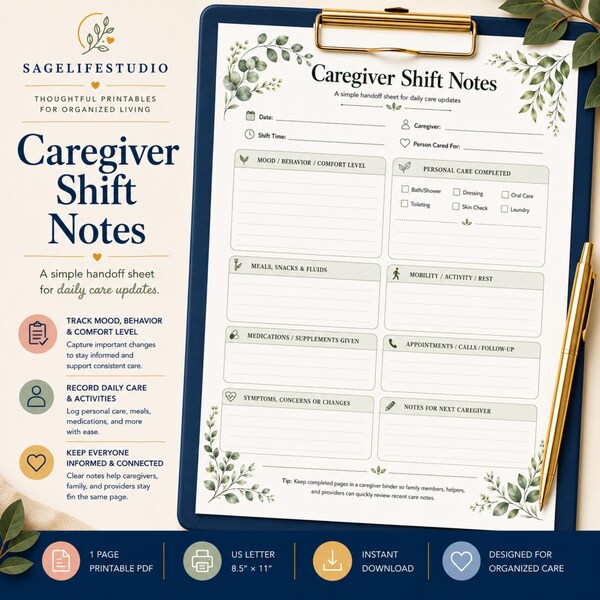
- Use a standard handoff note so the next person on shift is up to speed in two minutes. See caregiver handoff notes.
- Batch phone calls and paperwork into one set time each week.
- Keep a running “questions for the next appointment” page so nothing is forgotten.
Step 6: Review weekly, adjust monthly
Spend ten minutes each week asking: Did my breaks happen? What got in the way? What can I move or hand off? Adjust the plan rather than abandoning it. A plan that bends is easier to keep.
Keep a short personal list
On the back of your schedule page, write down a few things that are only yours: people you want to call, a standing activity, a small treat. When a break window opens, you will not have to think about how to use it.
Quick checklist
- Are my breaks on the calendar with start and end times?
- Does every break have a named backup?
- Does the backup have the information they need in writing?
- Have I asked someone for one specific task this week?
- Do I have a weekly review time?
Frequently asked questions
Ready-made printables to get you started
If you would like finished pages for your weekly schedule, task list and handoff notes, you can browse printable binders, logs and planners on Etsy.
Frequently asked questions
How do I schedule breaks when there is no one to cover for me?
Start small and look broadly: a neighbor, a friend, a faith or community group, or a local caregiver support organization. The care team may also know of options. A written information sheet makes it easier for any new helper to step in.
How often should a caregiver take a break?
There is no single answer, since every situation is different. A useful starting point is a little time daily, a few hours weekly and a longer break when you can arrange it. Talk with your own doctor or a counselor if you are concerned about how you are doing.
Can a printable planner help with caregiver stress?
A planner can help you see your time and keep information in one place, which may reduce scrambling. It is an organizing tool only and is not a treatment for stress or any health condition.