Daily Routine Chart for Caregivers: How to Build One That Gets Used
A daily routine chart is a one-page schedule that shows what usually happens at each point in the day, so anyone helping can see the plan at a glance. Build it by listing the fixed points first (meals, appointments, rest times), then adding the smaller tasks around them, and keep it to a single page.
This post is about organizing a schedule, not deciding what care someone needs. The care team sets the plan for health-related routines, so copy their instructions exactly and use the chart only to keep everything in one visible place.
Why a routine chart helps
When several people share caregiving, each one tends to carry a slightly different picture of the day in their head. A written chart removes the guessing. A substitute or new helper can read it in two minutes, and the family can see where things stand without a long conversation.
It also lowers the mental load on the main caregiver. Instead of remembering every step, you check the chart.
What to put on the chart
Start with the parts of the day that rarely move, then fill in around them:
- Wake-up and morning routine (getting up, washing, dressing, the help that is needed)
- Meals and snacks with usual times and any instructions from the care team
- Medication times, copied exactly from the care team’s or pharmacy’s plan (a time and a tick box only)
- Appointments and regular visitors (therapy, home help, family visits)
- Activities such as walks, hobbies, TV shows, phone calls
- Rest and quiet time
- Evening routine and bedtime
- Weekly extras like laundry day, shopping or a standing appointment
You do not need minute-by-minute detail. Time blocks such as “morning”, “lunchtime” and “afternoon” are often easier to keep than exact clock times.
A simple layout you can copy
Use a table with three columns: time block, what usually happens, and notes. For example:
| Time block | What usually happens | Notes |
|---|---|---|
| Morning | Wake up, wash, dress, breakfast | Follow the care team’s plan |
| Midday | Lunch, rest | Quiet time after lunch |
| Afternoon | Walk or activity, snack | Weather permitting |
| Evening | Dinner, wind-down, bedtime | Lights out by the usual time |
Add a small tick column for anything that must be confirmed each day. Print it, put it in a sleeve, and keep a dry-erase pen nearby if you want to change it often.
Routine versus daily log
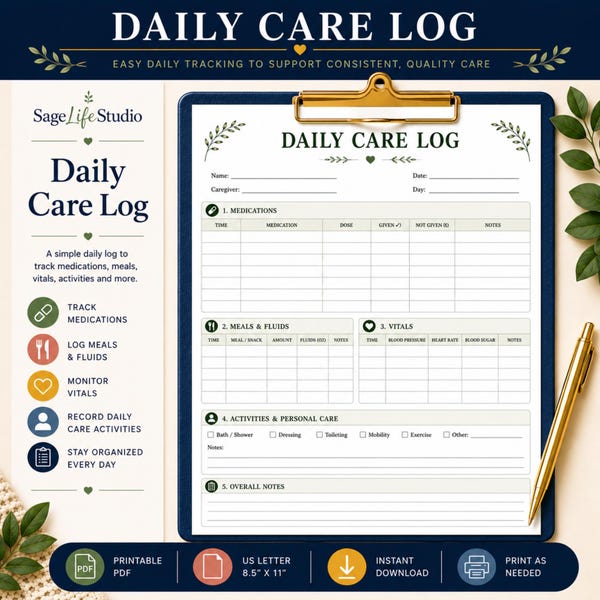
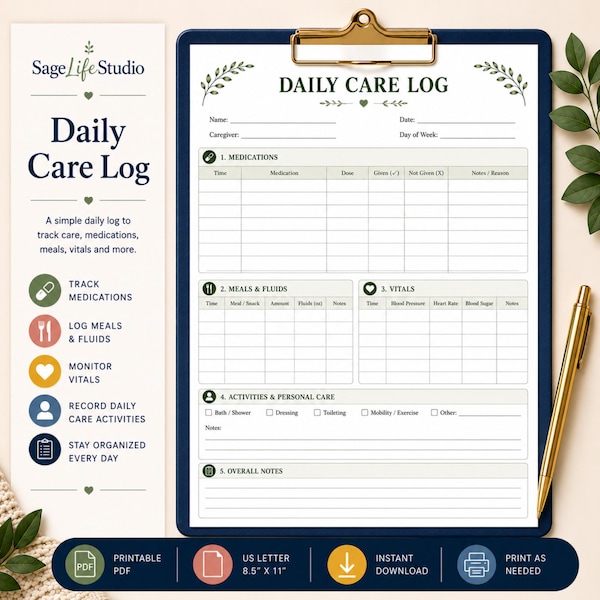
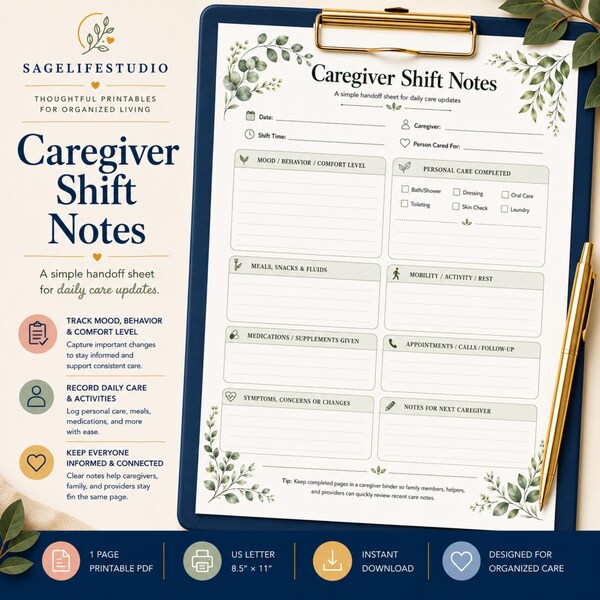
A routine chart says what is planned. A log records what actually happened. They work best as a pair: the chart on the fridge or the front of the binder, and the caregiver daily log beside it for notes. If someone works a set shift, add handoff notes so the next person knows what changed.
For households with children, the same idea works as a nanny weekly schedule and routine sheet.
Make it easy to follow
Charts fail when they are too busy or out of date. These habits help:
- Use short phrases and plain words
- Put the chart where helpers will actually look, such as the kitchen or inside the binder cover
- Write the date it was last updated at the top
- Keep one current version and remove old copies
- Mark flexible items as “usually” so nobody feels they have failed when the day changes
- Review it every few weeks and adjust to what is really happening
Keep it flexible
A routine is a guide, not a rule. Some days will not follow the chart, and that is fine. If the person you care for is unwell, tired or has an unexpected appointment, follow the care team’s instructions first and adjust the chart afterward. If something changes often, note it rather than trying to force the old schedule.
Ask the person you care for, where appropriate, what they would like included. A routine they helped shape is much easier to keep.
Who needs a copy
Think about everyone who might step in: family members, paid helpers, a respite carer, even a neighbour. Give each a copy, or tell them where the master copy lives. Also keep a copy in the binder you take to appointments, since it helps you describe a typical day without relying on memory.
Quick checklist
- List fixed points first, then fill in the rest
- Copy health-related times exactly from the care team’s plan
- Use time blocks instead of exact minutes where possible
- Keep it to one page and put the date at the top
- Place it where helpers will see it
- Review and update every few weeks
Frequently asked questions
Ready-made printables to get you started
If you would rather start with finished pages than a blank sheet, you can browse printable logs, planners and binders on Etsy.
Frequently asked questions
What should a daily routine chart for a caregiver include?
Wake-up and morning tasks, meals, medication times as given by the care team, appointments, activities, rest, and the evening routine. Keep it to one page with short phrases.
How detailed should a caregiver routine chart be?
Detailed enough that a new helper understands the day, but not so detailed that it is hard to keep up. Time blocks like morning, midday and evening are often easier to follow than exact minutes.
Can a routine chart replace instructions from the care team?
No. A chart only keeps information organized. Health-related routines should follow the care team's instructions, and questions about care should go to them.