How to Keep a Symptom Journal: Simple Organizing Tips That Last
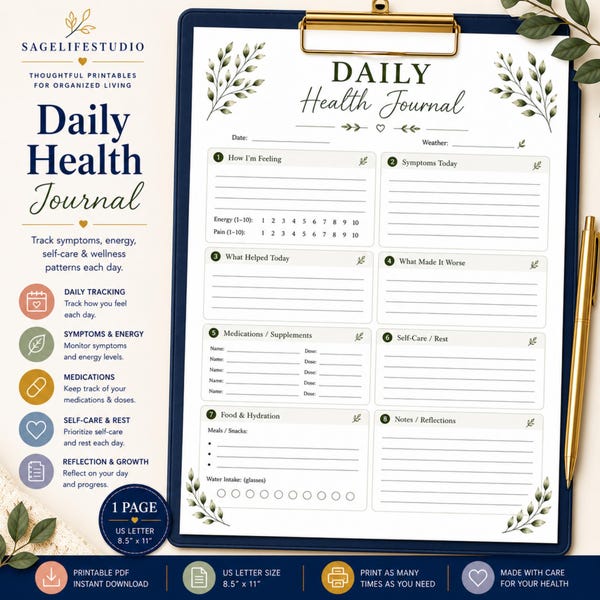
A symptom journal is a dated notebook or printed page where you write down what you notice each day, in plain words, so the details are on paper instead of in your memory. The easiest way to keep one going is to make it short: the same few lines, in the same place, at roughly the same time each day.
This post is only about organizing information. A journal does not diagnose anything, and it cannot replace your care team. Follow your doctor’s or nurse’s instructions, and ask them what they would like you to track and how.
Why a written journal helps
When an appointment comes around, most of us remember the last two days and forget the rest. A journal gives you the whole stretch of time at a glance. It also helps caregivers, because a husband, daughter or hired aide can read the same notes without asking the same questions again.
A journal is also useful when you are tracking for someone else, such as a parent or a child. One shared page means everyone writes in the same format and nothing gets lost in text messages.
Start with a clear purpose
Before you write a word, decide who the journal is for. Is it for you, for a family member you look after, or for a visit with a specialist? Ask the care team whether they want anything specific recorded. Their answer shapes the page, so write it at the top: “Bring to appointment on [date]” or “Shared with night caregiver.”
Keep the scope small. A journal that tries to capture everything is abandoned in a week. A journal with five lines a day is still going three months later.
What to write each day
Pick a short list of fields and stick to them. A good starting set:
- Date and time of each entry
- What you noticed, in your own words (“woke up stiff”, “headache after lunch”)
- How it felt on a simple scale, such as 0 to 10, using the same meaning every day
- What was going on around it: meals, sleep, activity, stress, weather
- Anything given or done, copied from the label or the care team’s instructions
- Questions to ask at the next visit
Describe, do not interpret. “Slept about five hours” is a note. “Sleeping badly because of the new thing” is a guess. Leave the conclusions to the professionals.
A layout you can copy
A single page per week keeps things tidy:
| Day | Time | What I noticed | 0-10 | Notes / questions |
|---|---|---|---|---|
| Mon | Morning | |||
| Mon | Evening | |||
| Tue | Morning |
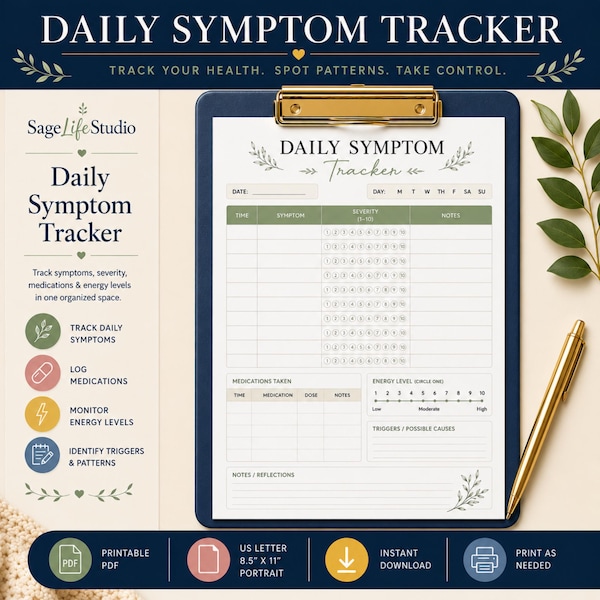
Add a “week at a glance” box at the bottom for patterns you spotted, and a “bring to the appointment” box for the top three points. If you already keep a symptom tracker, the journal can be the narrative page behind the tracker’s checkboxes.
Make the habit stick
The best journal is the one that is easy to reach. A few ideas:
- Keep the page and a pen where you take your morning or evening routine, not in a drawer
- Tie it to something you already do, like brushing your teeth or making tea
- Allow “nothing to report” as a valid entry so a quiet day does not break the chain
- Date every entry, even when it is late, and mark it “added later”
- Use a binder so you can add or remove pages without losing the order
If you forget a day, do not try to fill it from memory. Skip it and carry on.
Bringing it to appointments
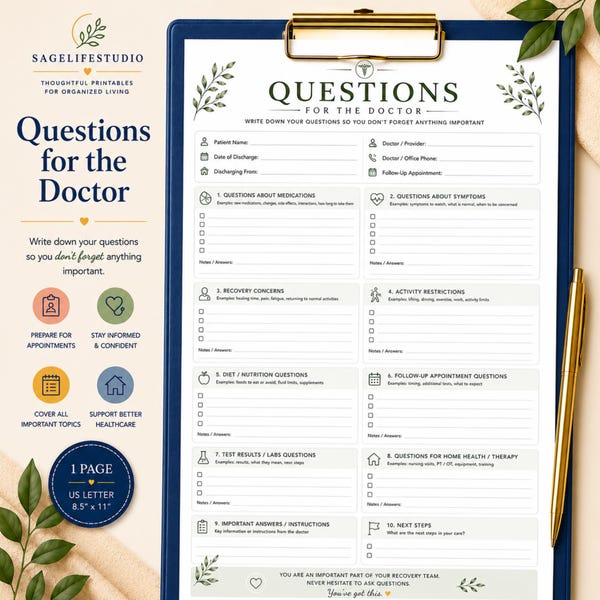
A day or two before a visit, read back through the pages and highlight the points you want to raise. Write your questions on a separate sheet, as in our guide to questions to bring to a doctor’s appointment. Bring the journal, but let the clinician lead. They may want only a summary, and they decide what the information means.
After the visit, write down what you were told and any follow-up in your doctor appointment log, so the journal and the visits stay linked.
Privacy
A symptom journal contains personal health details. Keep it in a closed binder or folder, share it only with people who need it, and think about what you want to leave with a sitter or aide. If in doubt, give them a copy of the routine pages and keep the personal notes for yourself.
Quick checklist
- Decide who the journal is for and ask the care team what to track
- Keep to five or six fields
- Write what you notice, not what you think it means
- Date every entry
- Store it where you will see it daily
- Review it before appointments and bring your questions
- Keep it private and filed
Frequently asked questions
Ready-made printables to get you started
If you would like finished pages instead of a blank notebook, you can browse printable journals, trackers and binders on Etsy.
Frequently asked questions
What should I write in a symptom journal?
Record the date and time, what you noticed in plain words, a simple 0 to 10 rating, what was happening around it, and any questions. Ask your care team if they want anything specific tracked.
How often should I update a symptom journal?
Whatever you can keep up. Many people write once or twice a day. A short entry made daily is more useful than a long one you stop after a week.
Can a symptom journal diagnose a problem?
No. It only keeps your observations organized so you can share them with your doctor or care team, who will decide what they mean.