Pet Care Binder: Vet Info, Feeding, Meds and Emergency Plan
A pet care binder is one folder that holds everything someone else would need to look after your animal: vet contacts, feeding routine, medication notes, records and an emergency plan. Start with a one-page summary on top, then add tabbed sections behind it. If you can hand the binder to a stranger and they could care for your pet for a weekend, it is doing its job.
This is an organizing guide, not veterinary advice. Copy medication names, doses and feeding instructions exactly as your vet gave them, and follow your vet’s directions. The binder only keeps that information in one place.
Why keep a binder at all
Pet details live in too many spots: a vet portal, a fridge magnet, a text thread, a drawer of receipts. That works until you are traveling, a sitter arrives, or something happens at 10 p.m. and you cannot find the clinic’s after-hours number.
A binder also helps with everyday jobs. You can see when vaccines were recorded, which food you switched to, and which questions to bring to the next visit. Families with more than one pet or more than one caregiver benefit most, because everyone reads from the same page.
Page one: the quick-reference summary
Make this a single page that can be pulled out and taped to a fridge.
- Pet’s name, species, breed, age and a recent photo
- Microchip number and the company that holds the registration
- Your phone number and a backup contact
- Regular vet and the nearest emergency clinic, with addresses
- Food, amount and times in one line
- A short note on any medication, pointing to the medication page
Keep the wording short. Details go behind it.
Section 1: vet and contact information
List your regular clinic, the emergency or after-hours clinic and any specialist. Add phone numbers, addresses and hours. Note who is authorized to approve care when you are away and how the clinic should reach you. If you use pet insurance, record the company, policy number and claims phone number here. Our emergency contact sheet guide shows a layout that works for people and pets alike.
Section 2: feeding and daily routine
Write down what actually happens in your house, not what you hope happens.
- Food brand and type, portion size and meal times
- Treats allowed and how many
- Water, walks, litter or cage cleaning
- Sleep spot, crate rules and favorite toys
- Foods or items the pet should not have, as advised by your vet
A weekly grid is easier to follow than a paragraph. If a sitter will be involved, pair this section with a pet sitter information sheet so the handoff is complete.
Section 3: medications and supplements
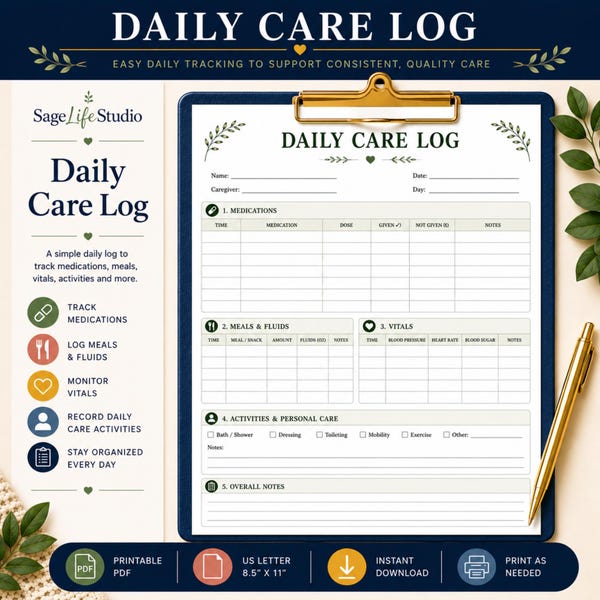
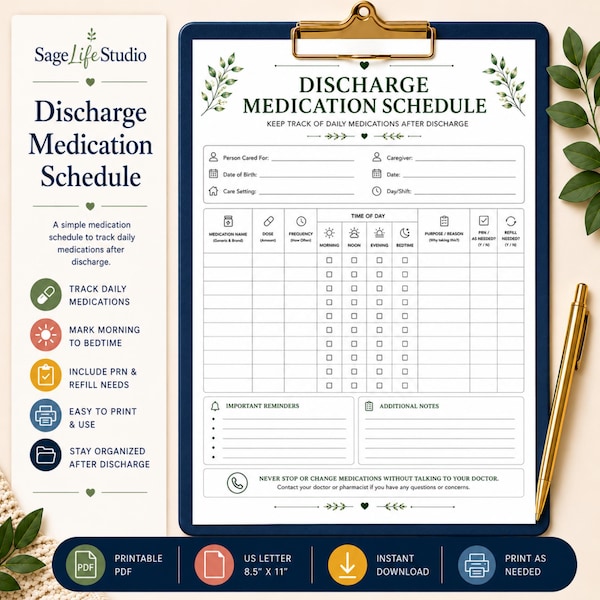
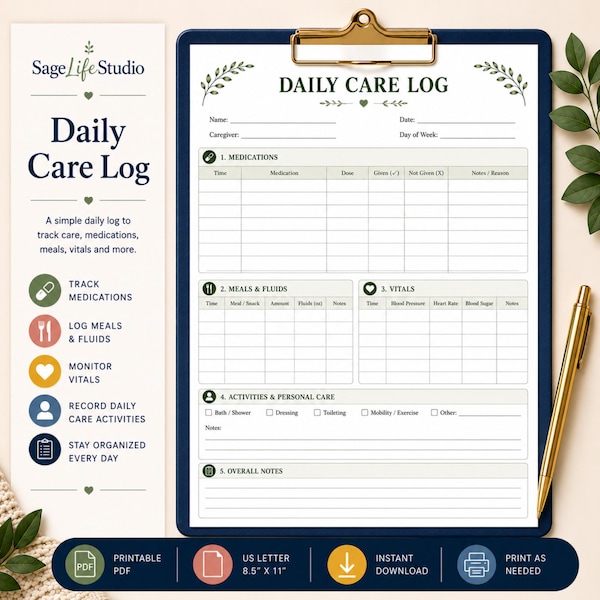
Make one entry per item with the name, the amount and schedule as your vet prescribed, the start date and the reason in your own words. Add a place to tick off each dose. Note where the medicine is stored and who may give it. Include any written instructions from the vet’s office, and call the clinic with questions rather than guessing.
Keep a log going, even for a short course. It makes it easy to answer “when was the last dose?” without searching your memory.
Section 4: health records
Use a pocket page or tabbed divider for paperwork:
- Vaccination and licence records
- Visit summaries and invoices
- Lab or test results
- Spay or neuter, surgery and dental paperwork
- Notes on past reactions or concerns, as told to you by your vet
Date everything and keep the newest on top. A simple visit log, with date, reason, what the vet said and what to do next, ties it together. The same habits from a doctor appointment log apply here.
Section 5: behavior and handling notes
Add what a caregiver would only learn by trial and error: fear of thunder, pulling on the leash, hiding spots, how the pet reacts to visitors, which doors must stay closed. A few honest sentences prevent most surprises.
Section 6: the emergency plan
Keep this section calm and specific.
- Where the carrier, leash and first-aid supplies are kept
- The nearest emergency clinic, with directions and hours
- Who to call first, and who to call if you do not answer
- What to grab: the binder, medications and recent records
- A plan for evacuation or a storm, including a place that accepts pets
- Poison hotline number for your area, posted where everyone can see it
Print a smaller copy for the car or travel bag. Review the plan twice a year when you update the rest.
Setting it up in one evening
- Gather papers, receipts and medication labels
- Fill in the summary page first
- Add vet, feeding and medication pages
- File records behind dividers
- Write the emergency plan and post the key numbers
- Tell everyone where the binder lives
Then make a habit of updating it after each vet visit.
Quick checklist
- Summary page with photo and contacts
- Vet, emergency clinic and insurance details
- Feeding and routine
- Medication and dose log
- Health and vaccine records
- Behavior notes
- Emergency plan, reviewed twice a year
Frequently asked questions
Ready-made printables to get you started
If you would rather start with finished pages than a blank sheet, you can browse pet routine sheets, medication trackers and printable binders on Etsy.
Frequently asked questions
What should go in a pet care binder?
Include a summary page, vet and emergency contacts, feeding and routine, medication notes copied from your vet, health records, behavior notes and an emergency plan. Keep the newest pages on top and date everything.
How often should I update a pet care binder?
Update it after every vet visit, whenever food or medication changes, and at least twice a year to check contacts and the emergency plan.
Should I keep a paper or digital pet record?
Many owners keep both. A paper binder is easy for sitters and useful when power or Wi-Fi is down, while digital copies are handy for sharing with a clinic. Pick whichever you will actually keep current.