Vet Visit Log and Pet Medication Tracker: How to Keep Your Pet's Care Organized
A vet visit log is a running record of each appointment: the date, the reason, what the vet said, and any follow-up you were asked to do. A pet medication tracker is a separate page that lists what your pet takes, when it is due, and a tick box for each dose given. Keep both in one folder or binder and you can answer “when was that?” in seconds.
This post is about keeping information organized, not about deciding what your pet needs. Always follow your veterinarian’s instructions for treatment, medication and follow-up, and copy their wording exactly rather than writing it from memory.
Why keep a written record
Memory is unreliable when you are tired or worried. A written log means you do not have to remember whether the last visit was in spring or summer, or which of two household pets got the afternoon dose. It also helps when more than one person looks after the animal, because everyone is working from the same page.
A record is handy at the clinic too. If you see a different vet or visit an emergency practice, a tidy history lets you hand over the facts quickly instead of searching your phone.
What to put in a vet visit log
Give each visit its own line or small block. Useful fields include:
- Date and clinic name, plus the name of the vet you saw
- Reason for the visit (routine check, vaccination, a concern you raised)
- What the vet told you, written as close to their words as you can
- Instructions to follow and any date to return
- Cost and invoice number, in case you need them for insurance
- Questions for next time, so you can jot them down as they occur to you
Staple or clip the receipt and any paperwork behind the page. If you keep a pet care binder, the visit log sits well behind the vet information page.
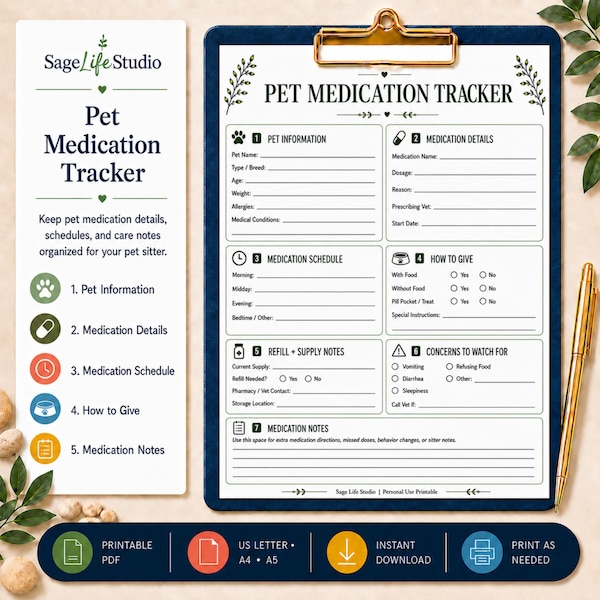
What to put in a pet medication tracker
The tracker should be a copy of what the vet or pharmacy label says, not your own interpretation. Include:
- Pet’s name and the name of the medication as written on the label
- The amount and timing exactly as printed or as your vet instructed
- Start date and, if given, the end date or the date to check back
- Who gives it and a tick or initial box for every dose
- Notes for anything you want to mention to the vet, such as a missed dose
Do not guess or change a dose because the tracker looks tidy. If the label or your vet’s instructions change, update the page and put the date at the top. Questions about medication belong with your vet or pharmacist.
A simple layout you can copy
A table per pet works well:
| Date | Medication (as labelled) | Given by | Time | Notes |
|---|---|---|---|---|
| Mon | As on label | Initials | Morning | Ate well |
| Tue | As on label | Initials | Morning |
Print one sheet per month so old ones can be filed. A clipboard or sleeve near the food storage is a good spot, since that is where you will remember to tick it.
Sharing it with sitters and boarders
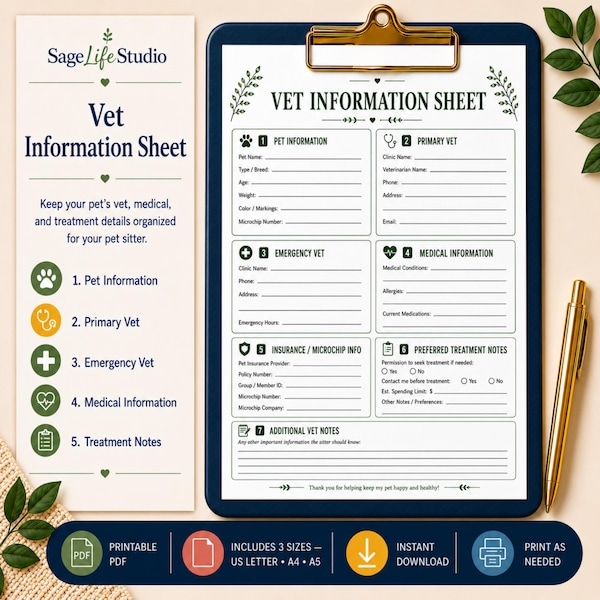
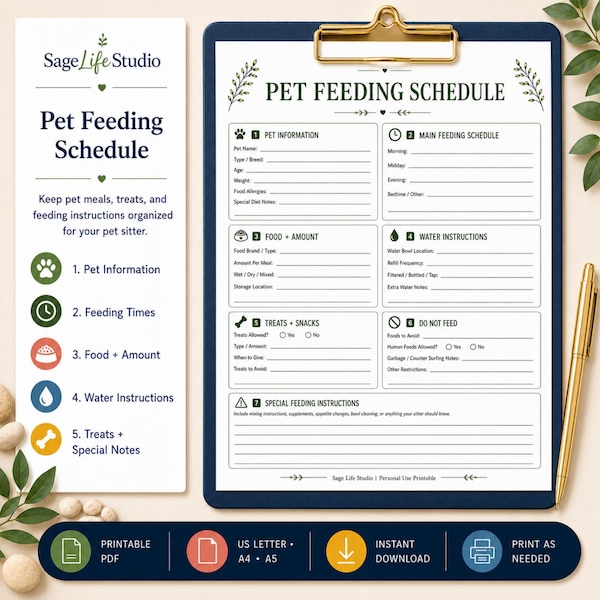
When someone else looks after your pet, the tracker becomes essential. Hand over a copy with the medication, the vet’s phone number and your instructions in writing, and ask the sitter to tick each dose. Our guides to the pet sitter information sheet and the dog boarding information sheet cover what else to include. Tell the sitter to call the vet or your emergency contact if they have any concern about your pet’s health.
Quick checklist
- One visit log and one medication page per pet
- Copy vet and label instructions word for word
- Date every update and remove outdated copies
- Keep receipts and papers behind the log
- Tick every dose, including who gave it
- Give sitters a copy, plus the vet’s contact details
- Review the log before each appointment and bring it with you
Frequently asked questions
Ready-made printables to get you started
If you would rather start with finished pages than a blank sheet, you can browse printable logs, planners and binders on Etsy.
Frequently asked questions
What should a vet visit log include?
The date, clinic and vet name, the reason for the visit, what the vet advised, any follow-up date, and the cost or invoice number. Write the vet's instructions as closely as you can to what they said.
How do I keep track of my pet's medication?
Use a tracker that copies the label or vet instructions exactly, with a tick box and initials for each dose. Keep it where you will see it and update it only when your vet changes the instructions.
Can a tracker replace advice from my vet?
No. A log only keeps information organized. Medication, treatment and health questions should always go to your veterinarian.